Germany did not start World War 2 with the best tanks. That surprises a lot of people. When German panzers rolled into Poland in September 1939, the bulk of their armored force consisted of small, lightly armed machines that wouldn’t last five minutes against a modern opponent. What made the Germans terrifying wasn’t their tanks — it was how they used them.
By 1942, that had changed. Forced to fight Soviet T-34s and Allied armor that was getting better every month, Germany began producing some of the most formidable tanks in the war — the Panther, the Tiger, and the near-mythical King Tiger. Individually, these machines were genuinely feared by Allied crews. Collectively, they were never produced in enough numbers to matter.
This is the full story of every German tank that fought in World War 2 — the good, the bad, the terrifying, and the ones that should never have left the drawing board.
1. Panzer I — The Tank That Started It All
In Service: 1934–1945 (frontline use ended 1941) Total Produced: ~1,500
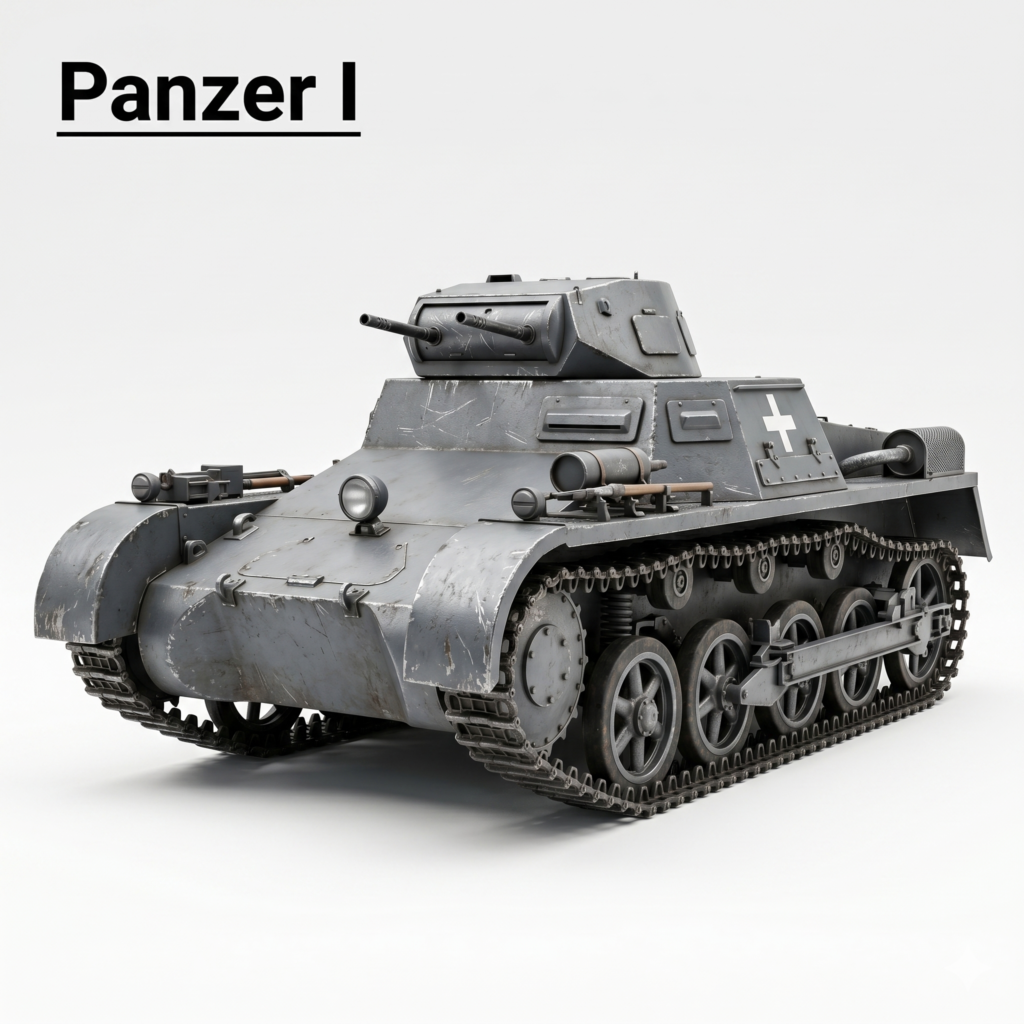
Germany wasn’t supposed to have tanks at all. The Treaty of Versailles had banned them. So when Hitler began rearming Germany in the 1930s, the Panzer I was officially described as an “agricultural tractor” to hide it from international observers.
In truth, it was barely a tank. Two machine guns, paper-thin armor, a two-man crew, and a top speed that a fast cyclist could almost match. It was designed as a training vehicle — something to teach German crews how to think in armor, how to coordinate, how to fight as a team.
The problem is that when war came in 1939, the Panzer I went to war with everyone else. In Poland and France, it worked — because the opposition was even worse or Germany’s tactics were so superior that the hardware almost didn’t matter. In North Africa and against the Soviets, it got slaughtered. By 1941 it was withdrawn from frontline tank duties, though hulls were converted into tank destroyers and command vehicles that served until 1945.
The Panzer I’s real legacy wasn’t combat — it was the generation of tank crews it trained, crews who went on to fight Panzer IIIs, IVs, Panthers and Tigers with the skills they’d built in these little machines.
Specifications
| Specification | Details |
|---|---|
| Weight | 5.4 tons |
| Crew | 2 |
| Main Armament | 2 × 7.92mm MG13 machine guns |
| Engine | Krupp M305 air-cooled, 57 hp |
| Top Speed | 23 mph (37 km/h) |
| Range | 93 miles (150 km) |
| Armor (max) | 13 mm |
2. Panzer II — Small but Everywhere
In Service: 1935–1943 (frontline), hulls used until 1945 Total Produced: ~1,856
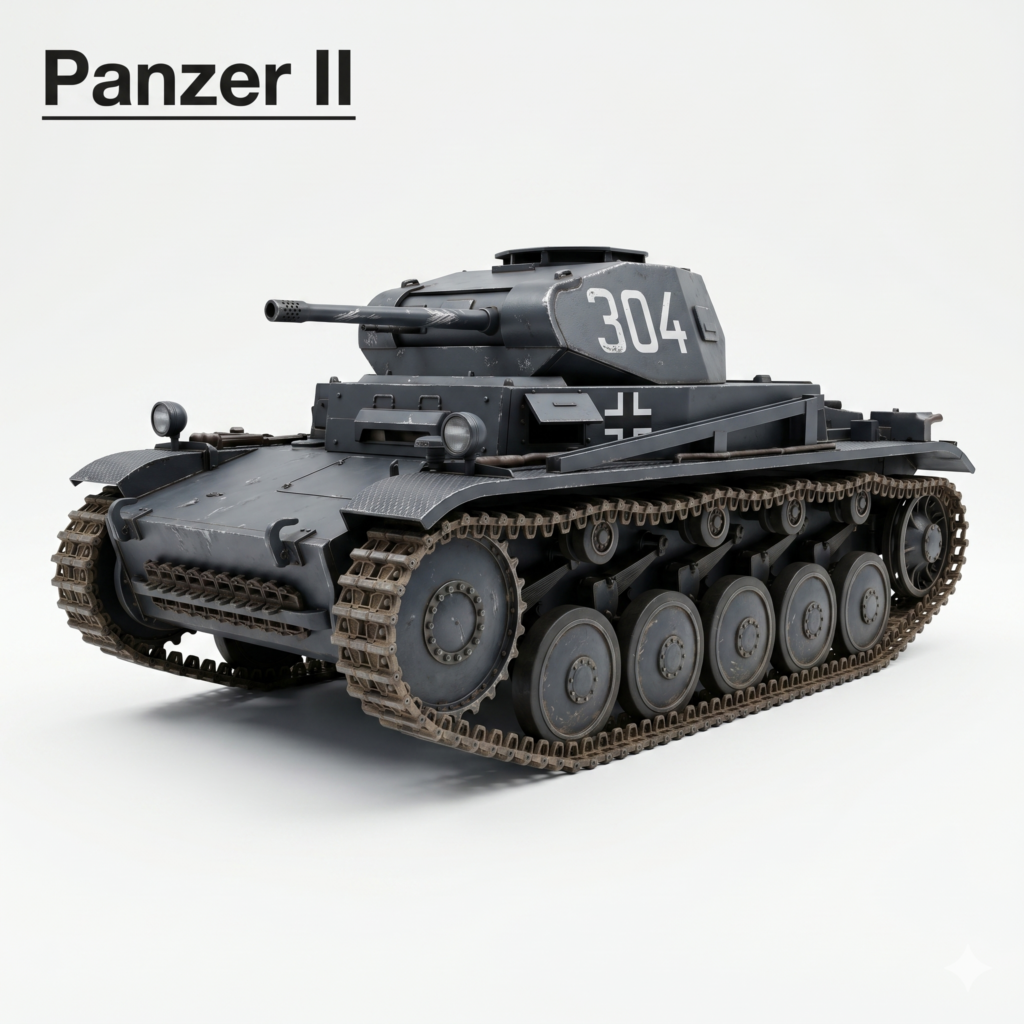
The Panzer II was meant to be a stopgap while Germany developed proper medium tanks. It ended up being the most numerous German tank during the invasions of Poland and France, which tells you something about how German rearmament was going.
It carried a 20mm autocannon — an upgrade over the Panzer I’s machine guns, but still not something you’d want to bring to a tank fight by 1940. In France, Panzer IIs occasionally dueled with British Matildas and French Char B1s, which they simply could not penetrate. They survived those encounters through speed, tactics, and luck, not firepower.
Like the Panzer I, the Panzer II’s hull outlived its usefulness as a tank. It was converted into dozens of variants — reconnaissance vehicles, self-propelled artillery, tank destroyers — and these served until the very end of the war. The Wespe self-propelled howitzer, one of Germany’s most effective artillery pieces, was built on a Panzer II chassis.
Specifications
| Specification | Details |
|---|---|
| Weight | 8.9 tons |
| Crew | 3 |
| Main Armament | 20mm KwK 30 autocannon |
| Engine | Maybach HL 62 TR, 140 hp |
| Top Speed | 25 mph (40 km/h) |
| Range | 118 miles (190 km) |
| Armor (max) | 35 mm |
3. Panzer 35(t) and 38(t) — The Czech Tanks Germany Stole
In Service: 1939–1942 (frontline) Total Produced: 424 (35t), 1,414 (38t)
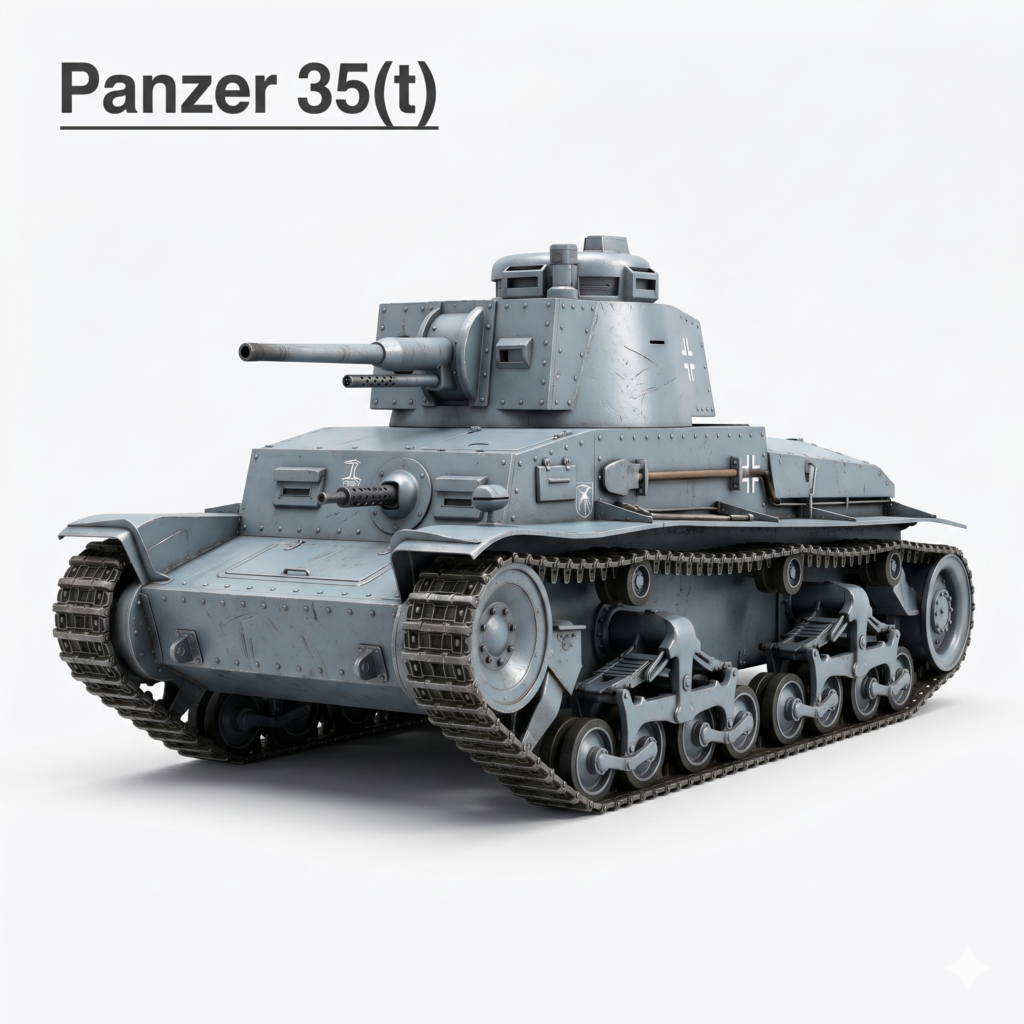
When Germany occupied Czechoslovakia in 1939, they inherited something genuinely useful — one of Europe’s most advanced tank industries. The Czech LT vz. 35 and LT vz. 38 were better than most of what Germany had at the time. Germany designated them Panzer 35(t) and 38(t) — the “t” stood for tschechisch, meaning Czech.
The 38(t) in particular was a well-designed, reliable light tank that served effectively in Poland, France, and the early stages of the Soviet invasion. It carried a 37mm gun and had reasonable armor for a light tank. German crews actually liked it.
By 1942, both were obsolete against Soviet armor. But like the Panzer I and II before them, their chassis proved remarkably adaptable. The 38(t) hull became the basis for the Marder III tank destroyer and later the Hetzer — one of the most effective German tank destroyers of the entire war. Czechoslovakia’s tank factories kept producing vehicles for Germany right until 1945.
Panzer 38(t) Specifications
| Specification | Details |
|---|---|
| Weight | 9.7 tons |
| Crew | 4 |
| Main Armament | 37mm Škoda A7 gun |
| Engine | Praga EPA, 125 hp |
| Top Speed | 26 mph (42 km/h) |
| Range | 155 miles (250 km) |
| Armor (max) | 50 mm |
4. Panzer III — The Backbone That Broke
In Service: 1939–1943 (frontline), later used in secondary roles Total Produced: ~5,774
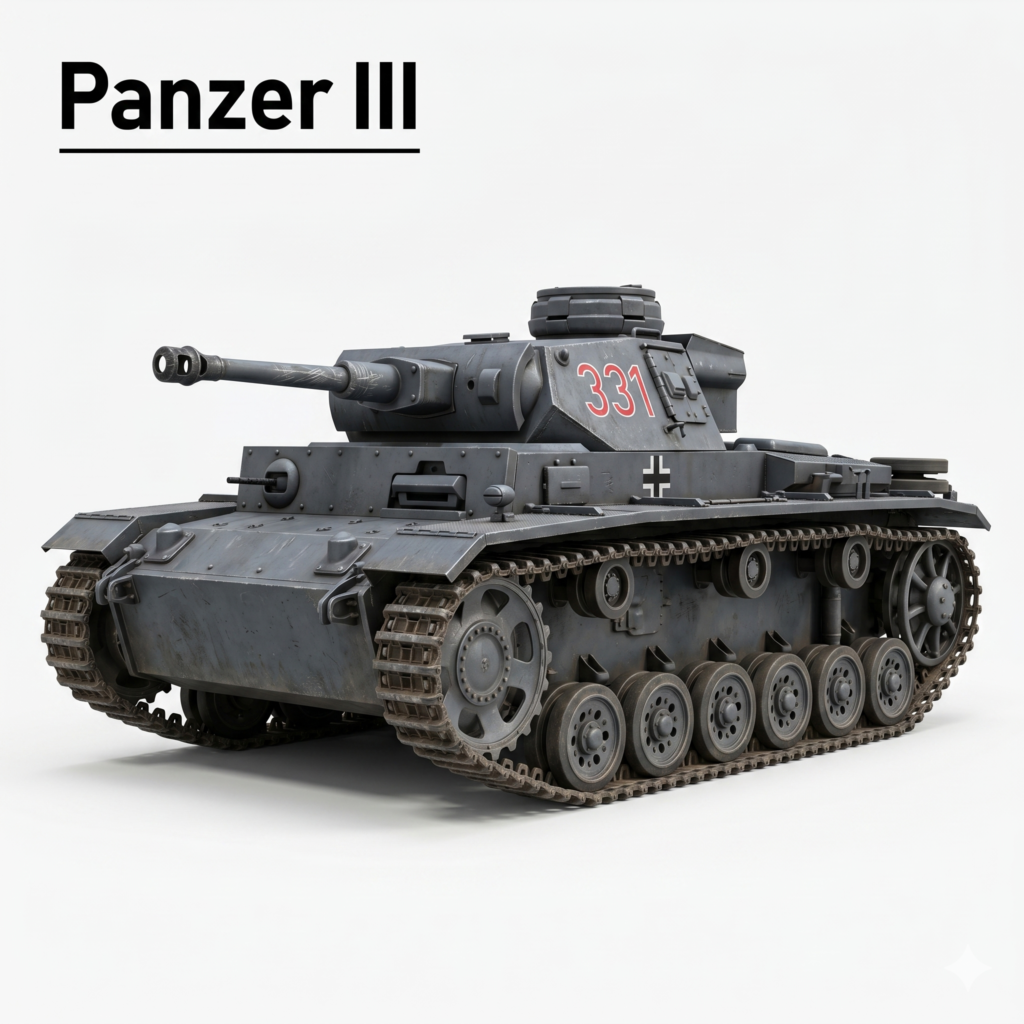
The Panzer III was supposed to be Germany’s main battle tank — the vehicle that would equip the bulk of panzer divisions and take the fight to enemy armor. For a while, it worked. In France in 1940, the Panzer III was fast, reliable, and hit hard enough to handle most opponents.
Then came the Soviet Union.
When German tanks rolled into Russia in June 1941, they ran into the T-34. The T-34’s sloped armor deflected shells that should have killed it. Its 76mm gun punched through Panzer IIIs at ranges where German crews couldn’t effectively shoot back. It was a genuine shock — German tank commanders filed urgent reports describing a tank they had no answer for.
Germany tried upgrading the Panzer III. They squeezed in a longer 50mm gun, added more armor, did everything they could to keep it competitive. None of it was enough. By 1943 the Panzer III was withdrawn from tank-versus-tank combat and reassigned to infantry support, a role it performed adequately until the end.
The Panzer III’s hull was also converted into the StuG III assault gun — which outlived the tank itself and became one of the most-produced German armored vehicles of the war.
Specifications (Panzer III Ausf. J, most common variant)
| Specification | Details |
|---|---|
| Weight | 21.5 tons |
| Crew | 5 |
| Main Armament | 50mm KwK 39 L/60 gun |
| Engine | Maybach HL 120 TRM, 300 hp |
| Top Speed | 25 mph (40 km/h) |
| Range | 96 miles (155 km) |
| Armor (max) | 50 mm (later upgraded to 70mm) |
5. Panzer IV — Germany’s Most Reliable Workhorse
In Service: 1939–1945 Total Produced: ~8,553
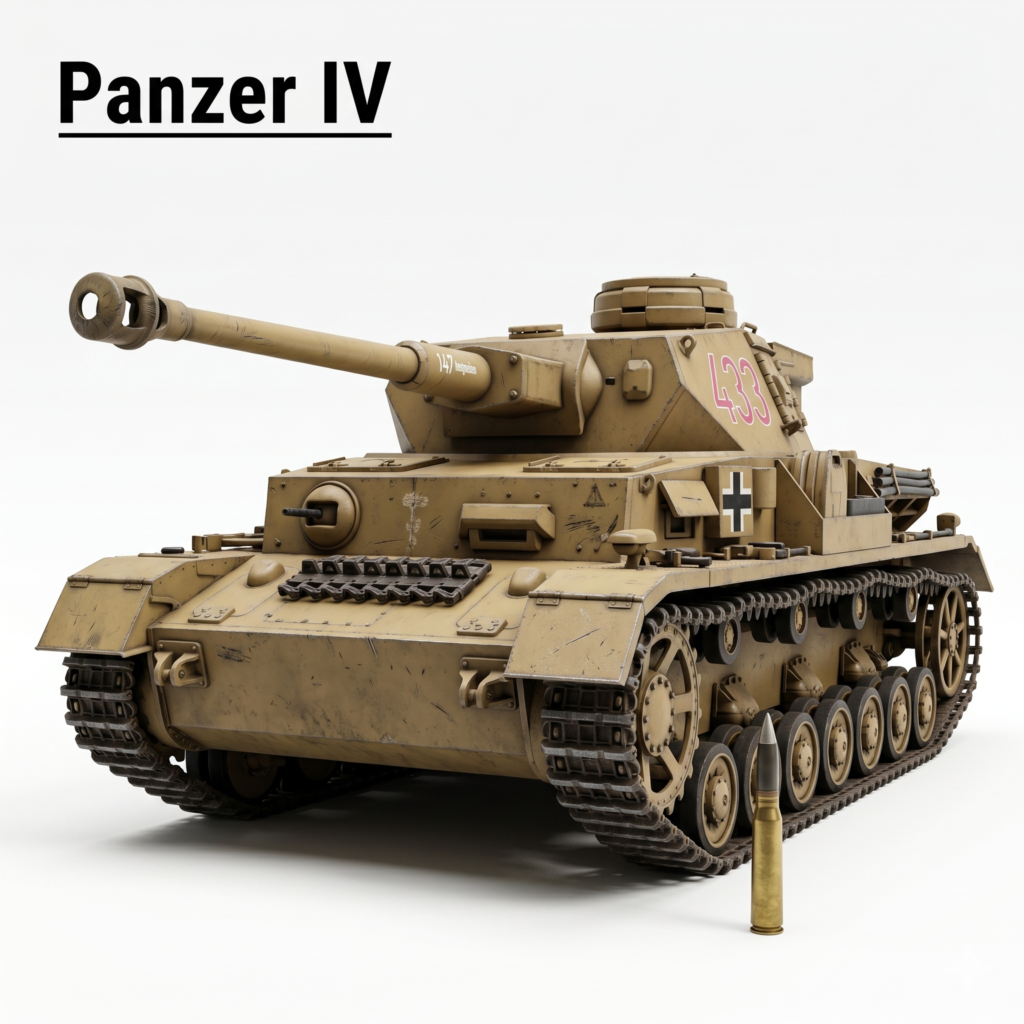
If the Sherman was America’s workhorse tank, the Panzer IV was Germany’s. It’s the only German tank that fought from the first day of the war to the last, and in many ways it tells the story of Germany’s entire war — starting as a capable, balanced design and being progressively upgraded, upgunned, and overloaded trying to keep pace with what everyone else was building.
The early Panzer IV carried a short-barreled 75mm gun designed to fire high-explosive shells at infantry — it was never meant to be a tank killer. When the T-34 appeared in 1941, Germany realized that needed to change. They fitted the Panzer IV with a long, high-velocity 75mm gun — the KwK 40 — that could punch through a T-34 at 1,000 meters. Suddenly the Panzer IV was a serious tank again.
Late-model Panzer IVs with the long 75mm gun were excellent tanks by any standard. They could handle Shermans effectively, fight T-34s on broadly equal terms, and were reliable enough to actually reach the battlefield — something the more complex Panther and Tiger frequently failed to do.
German crews trusted the Panzer IV. That counts for a lot.
Its problem was weight creep. Additional armor plates bolted on to counter improved Allied guns made it heavier than designed, strained the suspension, and reduced its already modest range. By 1944, it was increasingly outmatched, but Germany had nothing to replace it in the numbers needed.
Specifications (Panzer IV Ausf. H, most common late-war variant)
| Specification | Details |
|---|---|
| Weight | 25 tons |
| Crew | 5 |
| Main Armament | 75mm KwK 40 L/48 gun |
| Engine | Maybach HL 120 TRM, 300 hp |
| Top Speed | 26 mph (42 km/h) |
| Range | 130 miles (210 km) |
| Armor (max) | 80 mm frontal |
Strengths and Weaknesses
Strengths: Reliable and proven; long 75mm gun effective against most Allied tanks; crews knew it well; easy to maintain relative to Panther and Tiger.
Weaknesses: Armor inadequate against late-war Allied guns without add-on plates; weight creep reduced mobility and reliability; too few produced to replace losses.
6. Panther — The Best Tank Germany Ever Built
In Service: 1943–1945 Total Produced: ~6,000 Official Designation: Panzer V
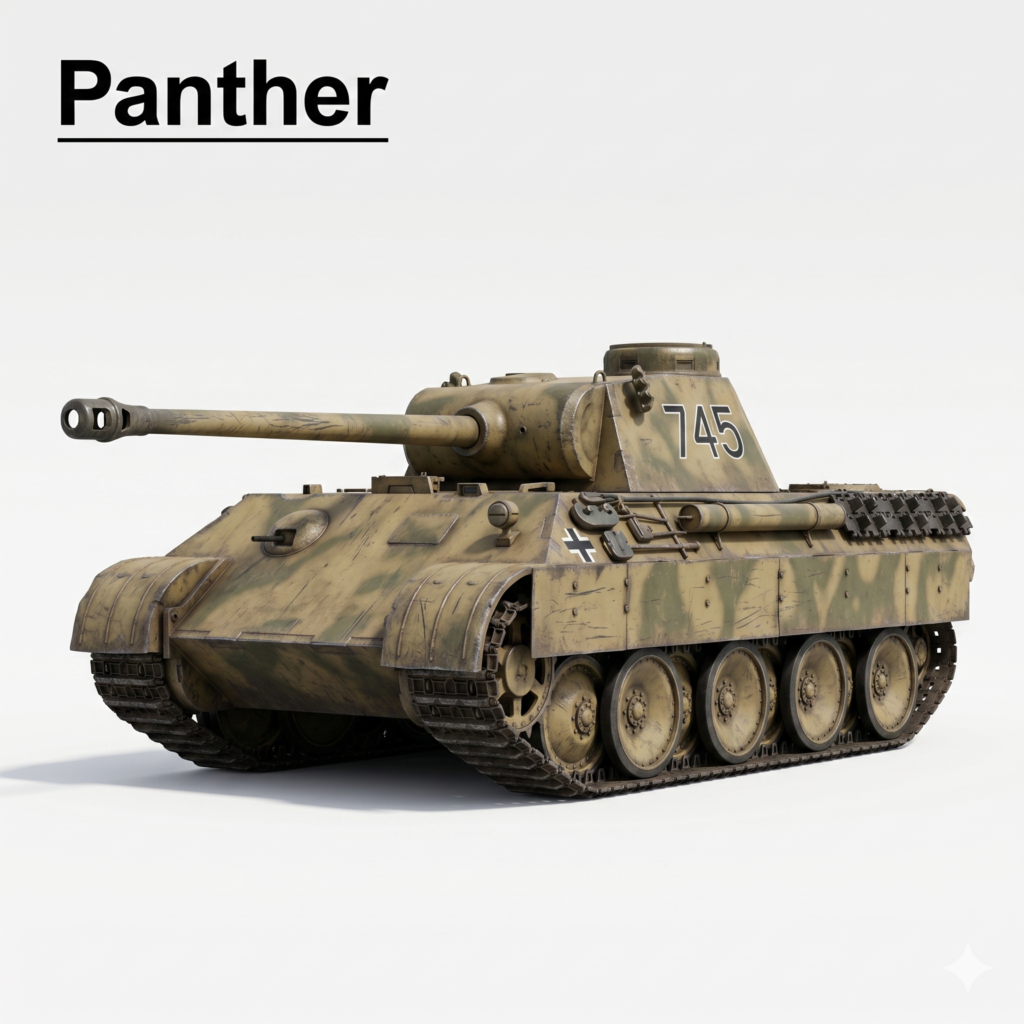
The Panther exists because of the T-34. When German engineers finally got their hands on a captured Soviet T-34 in 1941, they were genuinely impressed — and genuinely alarmed. The T-34’s sloped armor and powerful gun represented a leap forward that Germany’s existing tanks couldn’t match. The Panzer III was obsolete. The Panzer IV was struggling. Germany needed something new.
What they built was extraordinary. The Panther had thick, steeply sloped frontal armor that made it nearly invulnerable from the front at typical combat ranges. Its 75mm KwK 42 gun — long-barreled, high velocity — could penetrate any Allied tank at distances where return fire was largely ineffective. It was faster than the Tiger, better armored frontally than anything the Allies had, and carried more ammunition.
On paper, the Panther is arguably the best all-around tank of World War 2.
The problem was that it was rushed into production before it was ready. The first Panthers that fought at the Battle of Kursk in July 1943 were mechanically disastrous. Engines caught fire. Transmissions failed after a few dozen miles. Fuel leaked onto hot exhaust manifolds and Panthers burned without a single Allied shot being fired. Of 200 Panthers committed to Kursk, dozens were lost to mechanical failure before combat even began.
Germany fixed most of those problems over time. The late-war Panther Ausf. G was a far more reliable machine than the early models. But the Panther never fully shed its reputation for mechanical fragility, and its final drive — the weak point connecting engine power to the tracks — remained prone to failure throughout the war.
Allied tankers feared the Panther and with good reason. A Panther could engage a Sherman at 1,500 meters and be in little danger of return fire doing any damage. But Allied crews quickly learned to get around them. Flanking shots, artillery, tank destroyers, and aircraft dealt with Panthers more effectively than frontal tank duels.
The Panther’s side and rear armor was comparatively thin — a vulnerability that experienced Allied crews exploited whenever they could.
Specifications (Panther Ausf. G)
| Specification | Details |
|---|---|
| Weight | 44.8 tons |
| Length | 29 ft 1 in (8.86 m) with gun |
| Crew | 5 |
| Main Armament | 75mm KwK 42 L/70 gun |
| Engine | Maybach HL 230 P30, 700 hp |
| Top Speed | 28 mph (45 km/h) road; 15 mph cross-country |
| Range | 110 miles (177 km) road |
| Armor (max) | 80 mm frontal (at 55° slope) |
Strengths and Weaknesses
Strengths: Outstanding frontal armor; superb gun that outranged almost everything Allied forces had; good speed for its size; excellent optics gave crews a visibility advantage.
Weaknesses: Mechanical reliability issues plagued it throughout the war; thin side and rear armor; final drive failures common; complex and expensive to build; never produced in the numbers needed.
7. Tiger I — The Tank That Became a Legend
In Service: 1942–1945 Total Produced: 1,347 Official Designation: Panzer VI Ausf. E
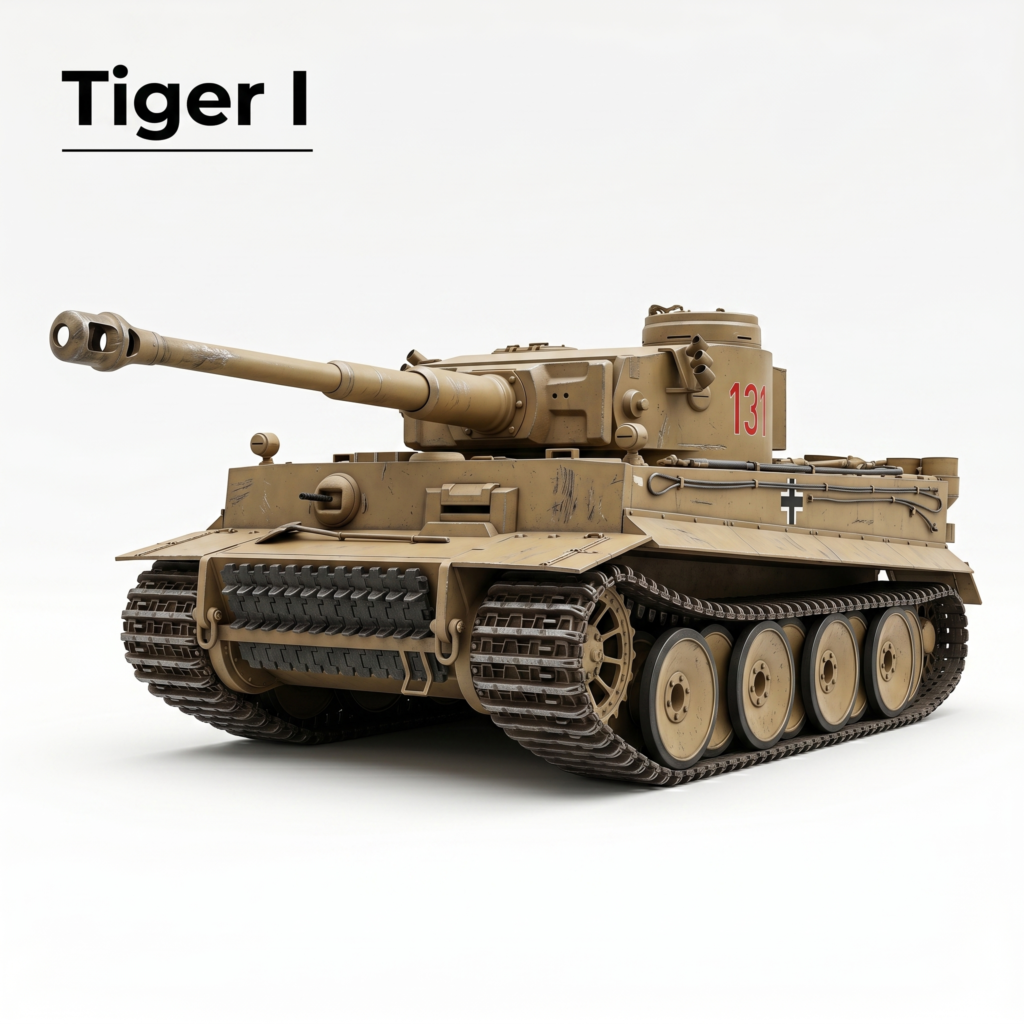
No tank in World War 2 generated more fear, more mythology, or more outright panic than the Tiger I. Allied soldiers reported Tigers that were actually Panzer IVs. Commanders refused to advance when Tigers were rumored to be in the area. The word “Tiger” had a psychological impact out of all proportion to the number of tanks actually deployed.
In fairness, that fear was not entirely irrational.
The Tiger I’s 88mm gun — derived from the famous Flak 88 anti-aircraft cannon — was simply devastating. It could destroy a Sherman at 2,000 meters. It could penetrate the frontal armor of a Churchill heavy tank at 1,100 meters. In several documented engagements, single Tiger crews destroyed a dozen or more Allied tanks before being knocked out themselves. SS Tiger ace Michael Wittmann famously destroyed over a dozen British vehicles in minutes at Villers-Bocage in June 1944 in one of the most celebrated — and most controversial — single-tank actions of the war.
The Tiger’s armor was equally intimidating. Early Shermans could not penetrate its frontal armor at any practical combat range. British six-pounder anti-tank guns needed to get within 100 meters to be sure of a kill from the front — a suicidal proposition. For Allied tank crews in 1942–43, the Tiger was a genuine nightmare.
But the Tiger came with serious problems that its legend tends to obscure.
It was enormously complex, time-consuming to build, and constantly breaking down. Its weight — 57 tons — meant it could cross very few bridges without special preparations. Its narrow transport tracks had to be swapped for wider combat tracks before every engagement and back again for rail transport — a process that took hours. Its fuel consumption was extraordinary; a Tiger could drink its entire fuel load in a single day of combat operations.
Germany produced only 1,347 Tigers in three years of production. America produced 49,000 Shermans in roughly the same period. When Tigers broke down — which they did constantly — they were nearly impossible to recover because nothing in the German inventory could tow one reliably. Abandoned Tigers were frequently destroyed by their own crews to prevent capture.
The Tiger was a phenomenal weapon in defense and in ambush. It was a logistical catastrophe in any prolonged campaign.
Specifications
| Specification | Details |
|---|---|
| Weight | 57 tons |
| Length | 27 ft (8.24 m) with gun |
| Crew | 5 |
| Main Armament | 88mm KwK 36 L/56 gun |
| Engine | Maybach HL 230 P45, 700 hp |
| Top Speed | 24 mph (38 km/h) road; 12 mph cross-country |
| Range | 73 miles (117 km) road |
| Armor (max) | 100 mm frontal |
Strengths and Weaknesses
Strengths: Devastating 88mm gun effective at extreme ranges; thick armor nearly impenetrable frontally by early Allied weapons; psychologically devastating to enemy crews.
Weaknesses: Mechanically unreliable; extremely heavy and hard to transport; massive fuel consumption; low production numbers; vulnerable to flanking fire and air attack; complex maintenance requirements.
8. Tiger II — The King Tiger
In Service: 1944–1945 Total Produced: 489 Also Known As: Königstiger, King Tiger, Royal Tiger
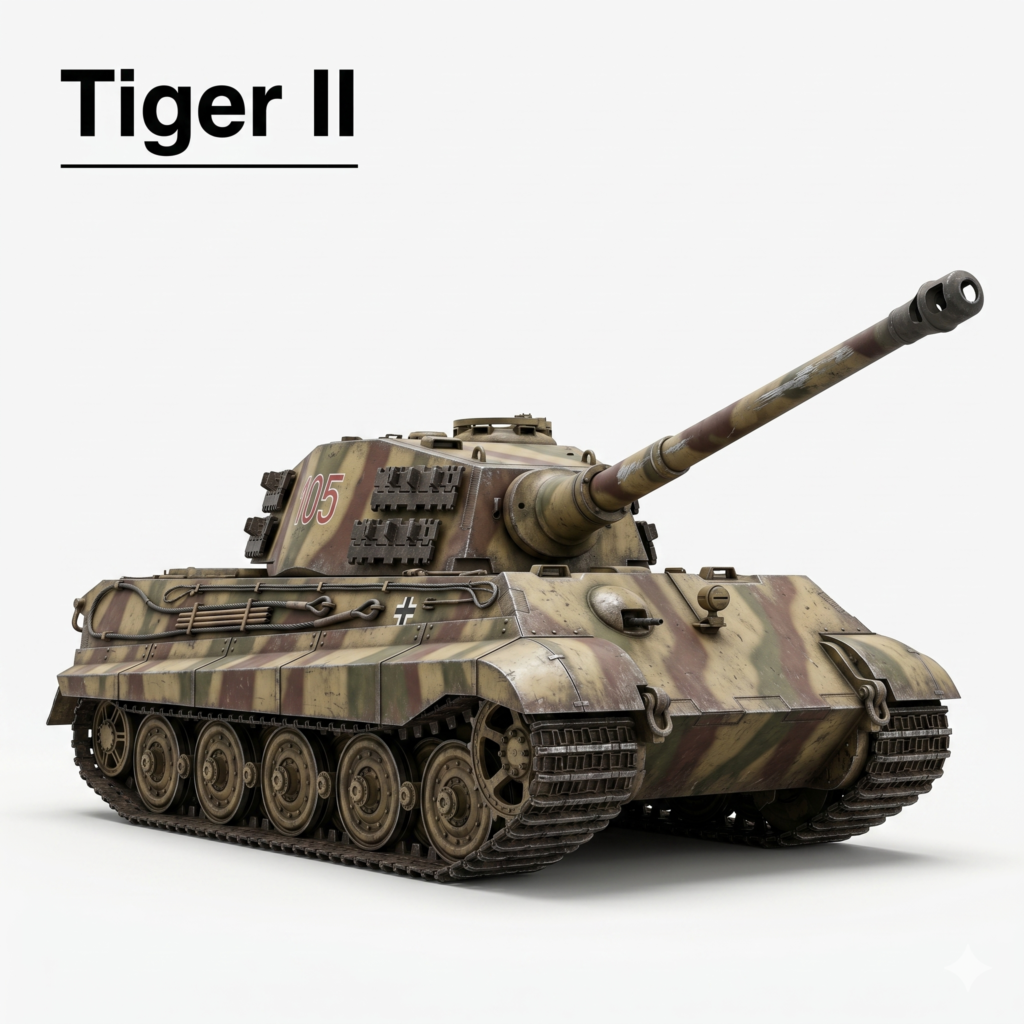
If the Tiger I was intimidating, the Tiger II was something else entirely. At 69 tons, it was the heaviest tank to see actual combat in World War 2. Its frontal armor was 150mm thick and heavily sloped — making it essentially invulnerable from the front to any Allied or Soviet gun at normal combat range. Its long 88mm gun — a newer, more powerful version than the Tiger I’s — could destroy a Sherman at 3,500 meters. Three and a half kilometers. Most Sherman crews couldn’t even see that far through their optics.
No Allied or Soviet tank gun could reliably penetrate the Tiger II’s frontal armor at any combat distance encountered in WW2.
That should have made it unstoppable. It wasn’t.
The Tiger II was so heavy that it destroyed road surfaces as it moved. Bridges collapsed under it. The same Maybach engine that powered the 44-ton Panther was asked to move 69 tons of King Tiger — and it simply wasn’t powerful enough. Breakdowns were constant and catastrophic. The transmission was so stressed by the vehicle’s weight that it frequently failed in combat. Recovery was essentially impossible; when a King Tiger broke down in the field, the crew destroyed it and walked away.
Of the 489 King Tigers produced, historians estimate that more were lost to mechanical failure and fuel shortage than to enemy fire.
In defense of fixed positions — hull-down behind a ridge, covering a road or river crossing — the King Tiger was genuinely terrifying. In the fluid, fast-moving warfare of 1944–45, it was a massive liability.
Specifications
| Specification | Details |
|---|---|
| Weight | 69.8 tons |
| Length | 33 ft 8 in (10.26 m) with gun |
| Crew | 5 |
| Main Armament | 88mm KwK 43 L/71 gun |
| Engine | Maybach HL 230 P30, 700 hp |
| Top Speed | 25 mph (41 km/h) road; 9 mph cross-country |
| Range | 68 miles (110 km) road |
| Armor (max) | 150 mm frontal |
Strengths and Weaknesses
Strengths: Virtually impenetrable frontal armor; extraordinarily powerful gun; dominated any frontal engagement it could reach.
Weaknesses: Underpowered for its weight; constant mechanical failures; destroyed roads and bridges; near-impossible to recover when broken down; fuel consumption was crippling; produced in far too few numbers.
9. Maus — The Monster That Never Fought
In Service: Never (prototype only) Total Built: 2 (one complete, one partial)
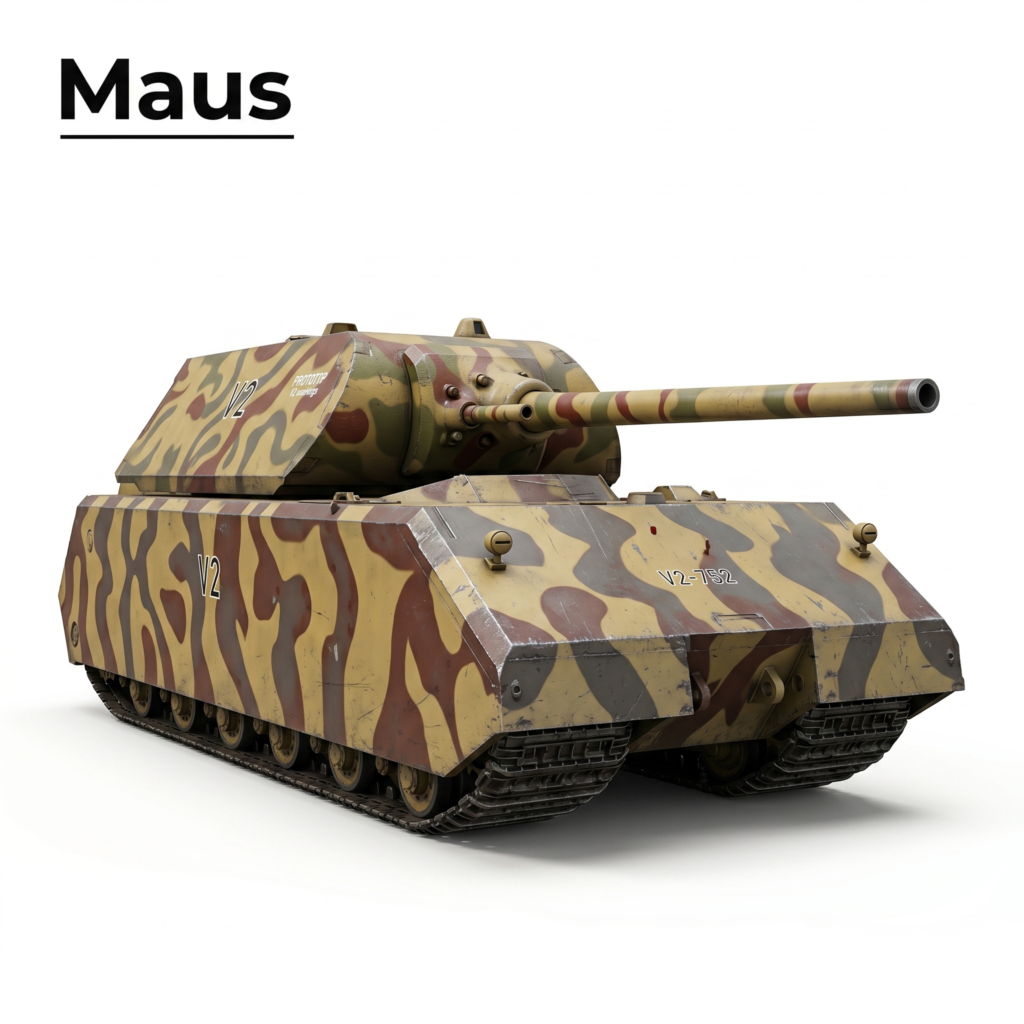
The Maus is where German tank development went completely off the rails. Ordered personally by Hitler, designed by Ferdinand Porsche, the Maus weighed 188 tons — heavier than most naval vessels. Its armor was up to 240mm thick. It carried a 128mm main gun alongside a coaxial 75mm gun.
It also could not cross a single bridge in Europe without that bridge collapsing. It could not be transported by rail on standard flatcars. It could not float and had no amphibious capability whatsoever — the plan was for two Maus tanks to pair up at river crossings, with one driving along the riverbed while the other powered it via cable from the bank.
The Maus never fought. One prototype was completed in late 1944. When Soviet forces approached the testing grounds at Kummersdorf in April 1945, the Germans blew it up. Soviet engineers found the wreckage, combined parts from both prototypes, and the resulting vehicle sits in the Kubinka Tank Museum outside Moscow today — the only Maus in existence.
It represents the worst of Germany’s late-war tank philosophy: the belief that bigger and heavier could substitute for numbers, fuel, and strategic coherence.
Specifications
| Specification | Details |
|---|---|
| Weight | 188 tons |
| Crew | 6 |
| Main Armament | 128mm KwK 44 gun + 75mm KwK 44 coaxial |
| Engine | Daimler-Benz MB 509, 1,200 hp |
| Top Speed | 13 mph (20 km/h) road |
| Armor (max) | 240 mm frontal |
10. E-100 — Germany’s Unfinished Giant
In Service: Never (incomplete prototype) Total Built: 1 (hull only, never completed)
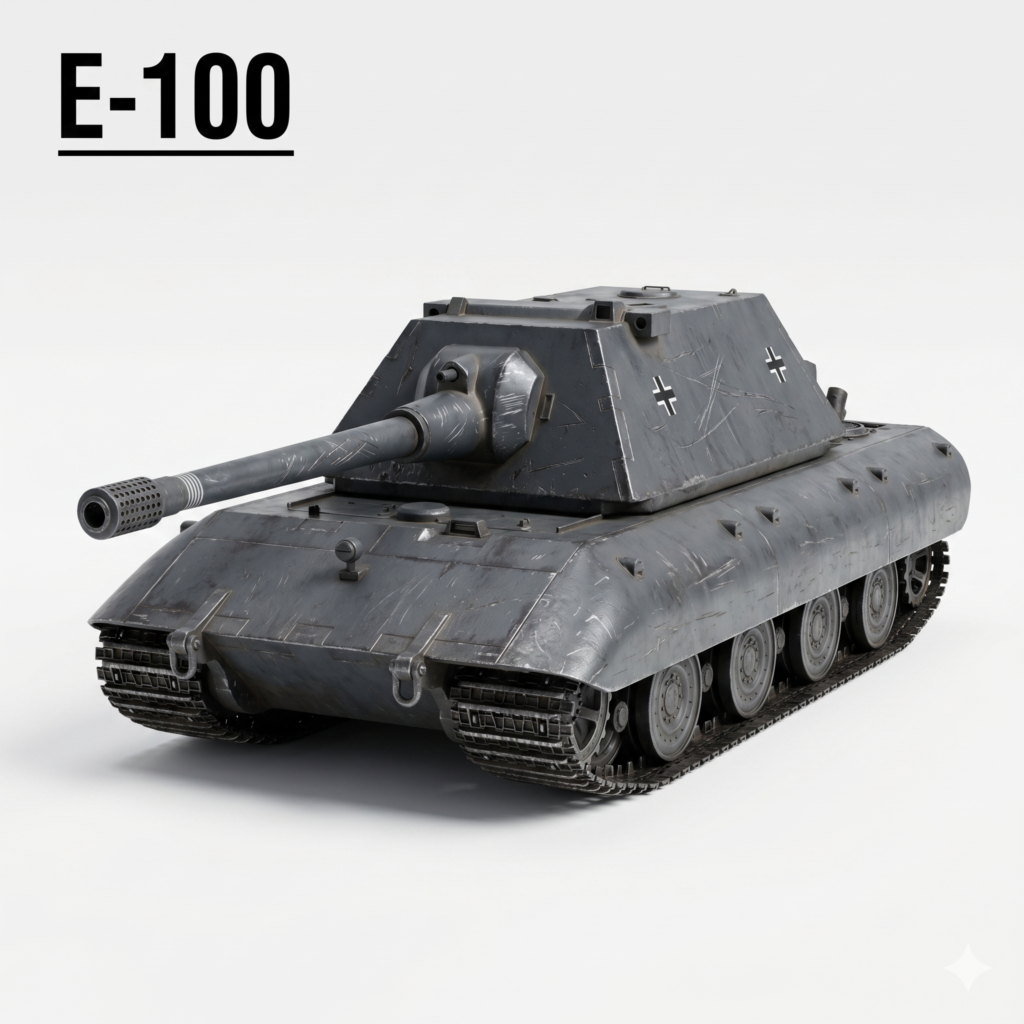
The E-100 was part of Germany’s Entwicklung (Development) series — an attempt to standardize German tank designs and simplify production. At 140 tons it was slightly lighter than the Maus but still completely impractical.
Construction began in 1943 but was suspended by order of Albert Speer in 1944 as a waste of resources. When the war ended, British forces found the incomplete hull and shipped it to Britain for evaluation. It was scrapped shortly after — deemed too impractical to be of any technical interest.
The E-100 existed as a hull without a turret. It never moved under its own power.
Complete WW2 German Tank Comparison Table
| Tank | Weight | Main Gun | Top Speed | Crew | Produced |
|---|---|---|---|---|---|
| Panzer I | 5.4 t | 2 × MG (7.92mm) | 23 mph | 2 | ~1,500 |
| Panzer II | 8.9 t | 20mm cannon | 25 mph | 3 | ~1,856 |
| Panzer 35(t) | 10.5 t | 37mm | 22 mph | 4 | 424 |
| Panzer 38(t) | 9.7 t | 37mm | 26 mph | 4 | 1,414 |
| Panzer III | 21.5 t | 50mm | 25 mph | 5 | ~5,774 |
| Panzer IV | 25 t | 75mm (long) | 26 mph | 5 | ~8,553 |
| Panther | 44.8 t | 75mm (high-vel.) | 28 mph | 5 | ~6,000 |
| Tiger I | 57 t | 88mm | 24 mph | 5 | 1,347 |
| Tiger II | 69.8 t | 88mm (long) | 25 mph | 5 | 489 |
| Maus | 188 t | 128mm | 13 mph | 6 | 2 |
| E-100 | 140 t | Never fitted | Never ran | — | 1 (hull) |
Frequently Asked Questions
What was the most feared German tank of WW2? Allied crews feared the Tiger I most, despite it being outclassed on paper by the later Panther. The Tiger’s 88mm gun and heavy armor created a psychological impact that outlasted its actual battlefield effectiveness. Many Allied tank crews reported “Tiger phobia” — refusing to advance when a Tiger was rumored nearby, even when the threat was actually a less capable tank.
Was the Panther better than the Tiger? In most categories, yes. The Panther was faster, had better sloped armor frontally, carried a gun nearly as effective as the Tiger’s, and was more maneuverable. Most German tank officers preferred commanding a Panther. However, the Tiger’s sheer armor thickness gave it a psychological and practical edge in defensive positions.
What was the most produced German tank of WW2? The Panzer IV, with approximately 8,553 units built across all variants. It was the only German tank produced continuously from 1939 to 1945.
Could any Allied tank defeat a Tiger frontally? Few Allied tanks could penetrate the Tiger’s frontal armor at normal combat ranges. The British 17-pounder gun (fitted in the Sherman Firefly and dedicated tank destroyers) could do it beyond 500 meters. The Soviet IS-2 heavy tank’s 122mm gun could defeat it at medium range. The American M26 Pershing’s 90mm gun was also capable of frontal penetration. Most Allied crews, however, relied on flanking maneuvers, artillery, and air support rather than direct frontal engagement.
Why didn’t Germany produce more Tigers? A single Tiger I required approximately 300,000 man-hours to build. A Sherman required around 50,000. Germany simply could not produce Tigers in meaningful numbers without abandoning other critical war production. Albert Speer, Germany’s Armaments Minister, repeatedly argued for simpler, more produceable designs — a argument that largely fell on deaf ears until it was too late.
What happened to German tanks after WW2? Most surviving German tanks were scrapped for metal after the war. A small number were captured and shipped to Allied nations for testing and evaluation. Today, approximately 8 Tiger Is survive worldwide — the best example is at the Tank Museum in Bovington, England, and is the only running Tiger in existence. Several Panthers, Panzer IVs, and other vehicles survive in museums across Europe, Russia, and the United States.
Conclusion
Germany’s tank story in WW2 is, at its heart, a story of brilliance undermined by its own ambitions. The engineers who designed the Panther and Tiger were genuinely talented — their vehicles were in many ways technically superior to anything the Allies produced. But technical superiority doesn’t win wars by itself.
The Panzer IV that broke down on a Ukrainian road in 1943 was worth nothing. The Tiger that ran out of fuel in Normandy in 1944 was worth nothing. The Panthers that burned at Kursk without firing a shot were worth nothing.
Meanwhile, Allied factories kept running. Sherman after Sherman rolled off production lines in Ohio, Michigan, and Pennsylvania. They weren’t individually better than Panthers. They were just there — always there, always running, always arriving in numbers that overwhelmed what Germany could put against them.
Germany’s tank designers kept asking how to build a better tank. The Allies kept asking how to build more of them. History remembers who got that question right.