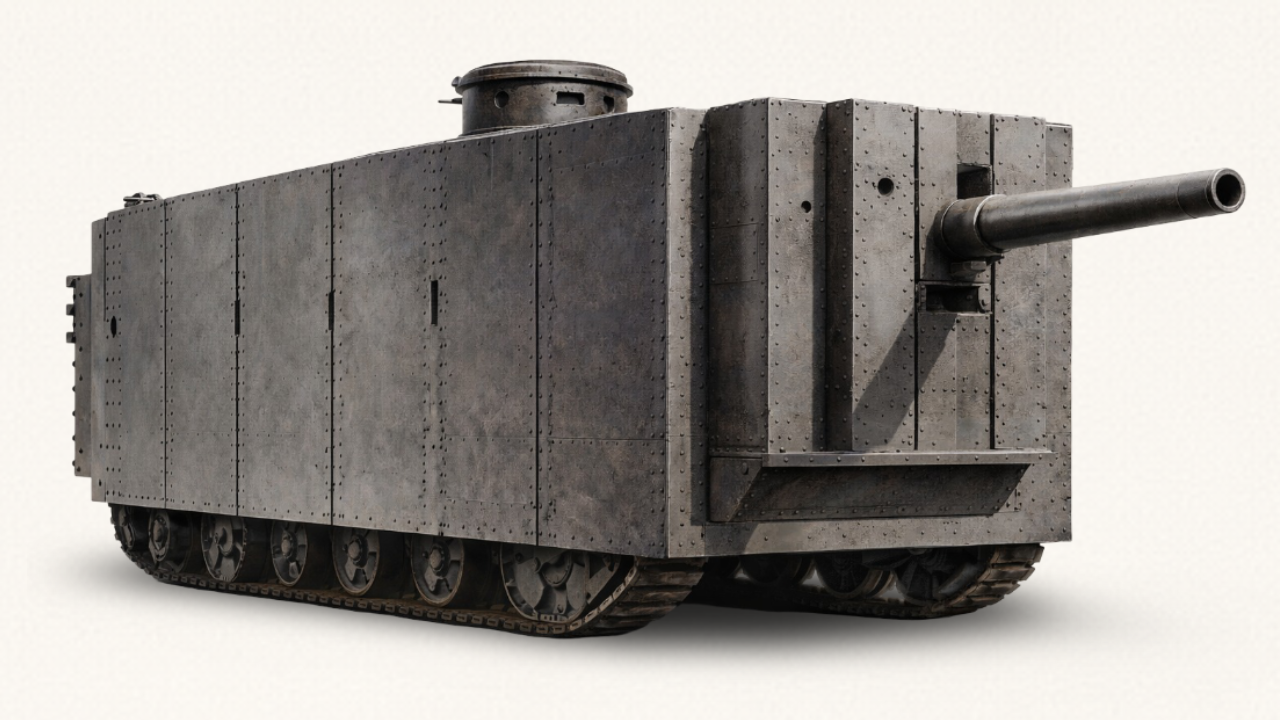
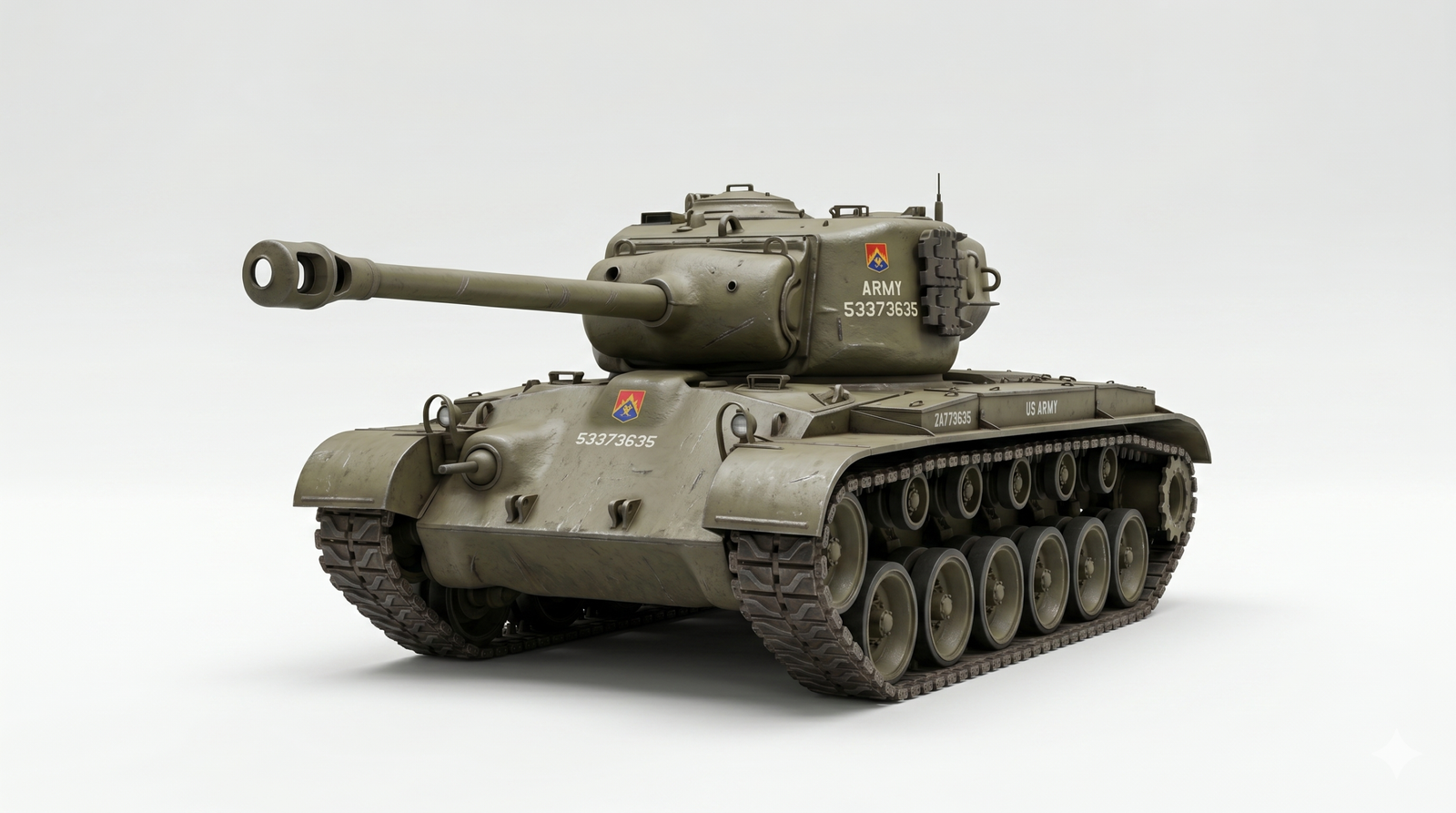
From the sunbaked deserts of North Africa to the rain-soaked hedgerows of Normandy, British tank crews fought, bled, and died in machines that were often outclassed, outgunned, and outnumbered. Yet through adaptation, ingenuity, and sheer stubbornness, they helped turn the tide of the most devastating war in human history. This is their story — told through every tank that rolled under the Union Jack.
The British Philosophy: Three Tanks for Three Jobs
Before the first shot was fired, Britain made a fateful decision. By 1936, the Army settled on three distinct categories of tank: light tanks for scouting and reconnaissance, infantry tanks to walk alongside foot soldiers through heavy fire, and cruiser tanks to race ahead and exploit breakthroughs. It seemed logical. In practice, it would haunt British armour for years — spreading resources thin, producing machines optimised for roles that rarely existed cleanly on the battlefield, and delaying the development of a true all-purpose battle tank.
The result, as one historian put it, was a succession of tanks that ranged “from the bad to the barely adequate.” But that is only part of the story.
Part One: The Light Tanks — Eyes of the Army
Vickers Light Tank Mk I through Mk VI (1929–1940)
Fast, lightly armed, and dangerously fragile.
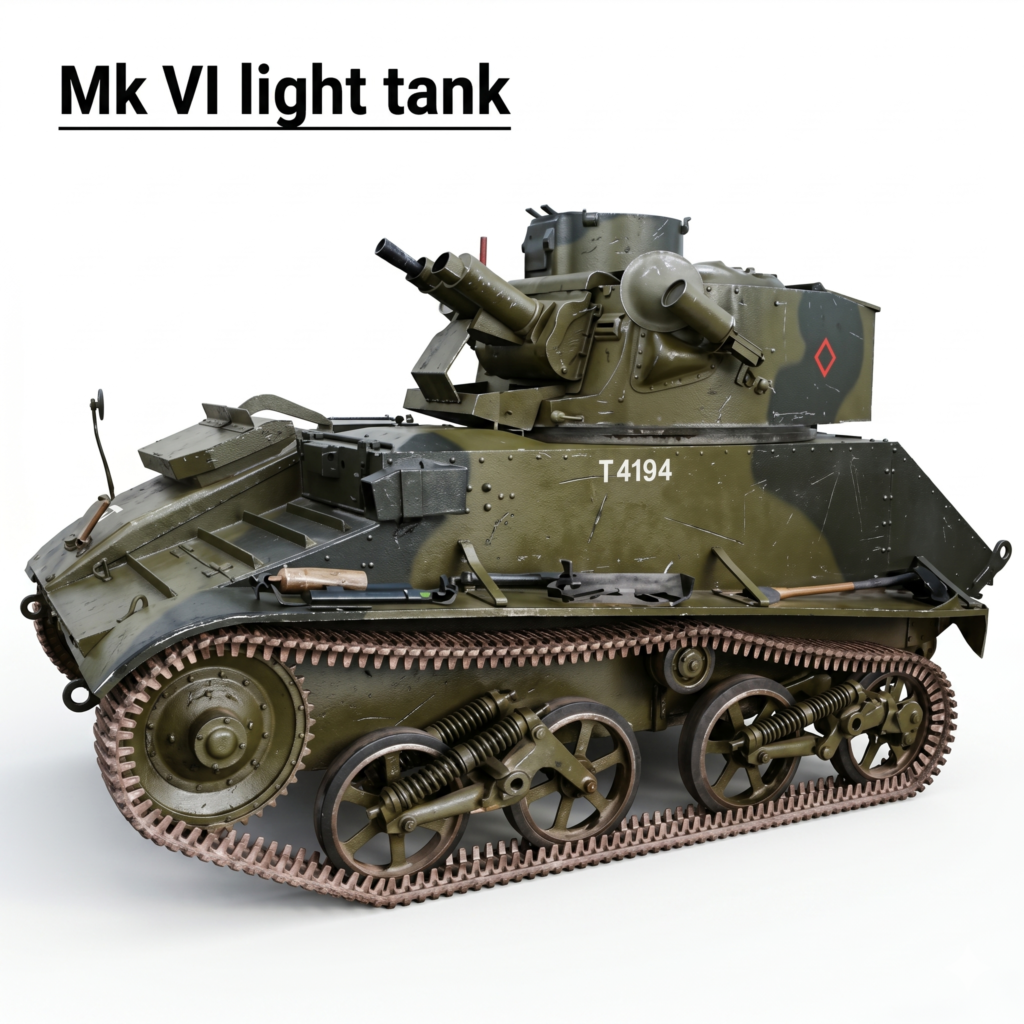
The Vickers Light Tanks were the workhorses of the pre-war British Army. Built in a series of incremental marks from Mk I to Mk VI, they were roughly five tonnes each, initially crewed by two men (later three), and armed with machine guns — no cannon whatsoever. The Mk VIB was the most common, and at the outbreak of war, these little tanks formed the bulk of British armoured units in France and the Western Desert.
They had one great virtue: speed. The Mk V could reach 32 mph, making it useful for reconnaissance. But reconnaissance was all they were good for. Their thin armour and lack of a proper gun meant that when the fighting turned serious in France in 1940, they were slaughtered. Scores were abandoned on the beaches of Dunkirk. By the time of the desert war, they were pulled from front-line service.
Despite their limitations, they represented an entire generation of British tank thinking — and the painful lessons learned from their failure drove the designs that followed.
Light Tank Mk VII — The Tetrarch (1938–1944)
An airborne tank that found its purpose in the sky.
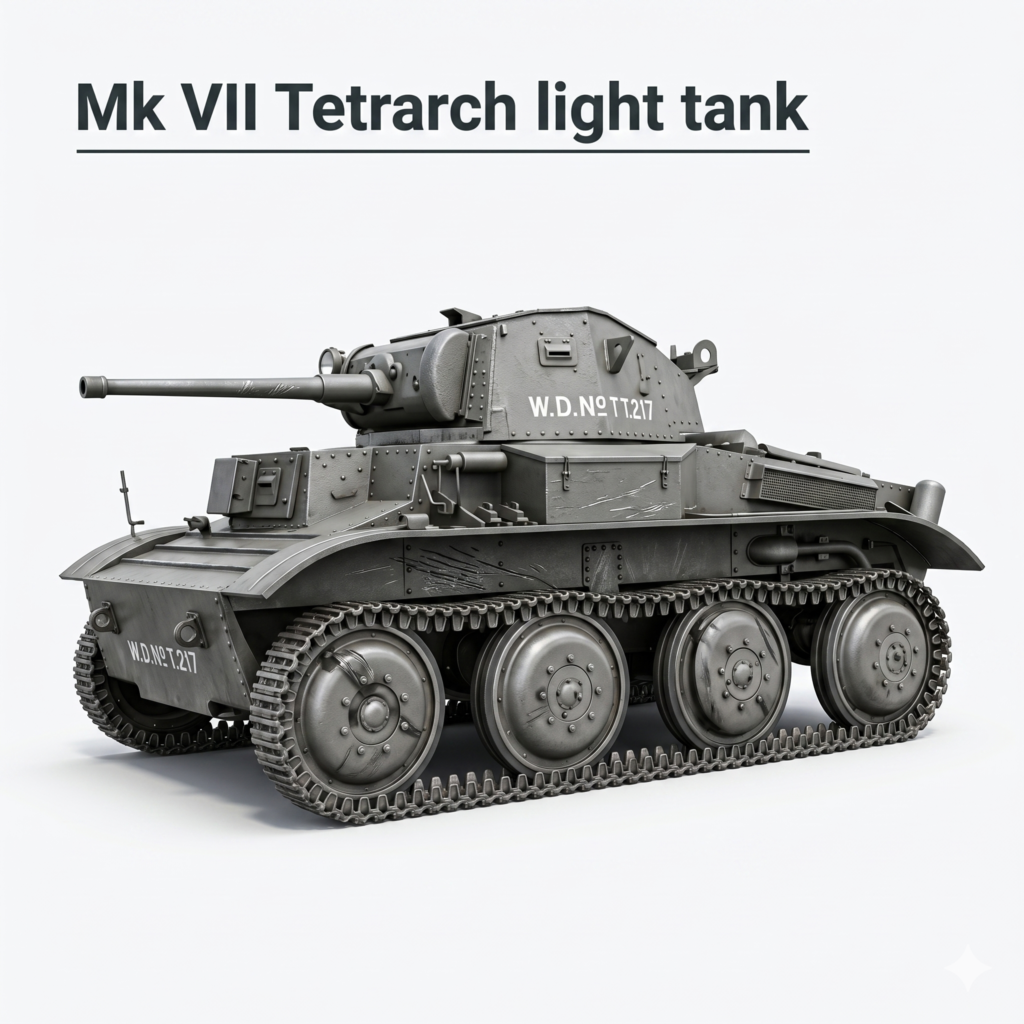
Designed in 1938 by Vickers-Armstrongs, the Tetrarch was faster and better armed than its predecessors, carrying a 2-pounder gun. But it was already outclassed by the time it entered service. Its story took an unexpected turn when the British Army started developing airborne forces — the Tetrarch was small and light enough to be carried inside the massive Hamilcar glider.
On D-Day, June 6, 1944, Tetrarchs landed in Normandy with the 6th Airborne Armoured Reconnaissance Regiment — the first tanks to arrive in Normandy by air. It was a bold, dramatic moment. The Tetrarch couldn’t fight Panthers, but it could move fast, support paratroopers, and cause confusion behind enemy lines. Sometimes, that was enough.
Light Tank Mk VIII — The Harry Hopkins (1943–1945)
A footnote, but a fascinating one.
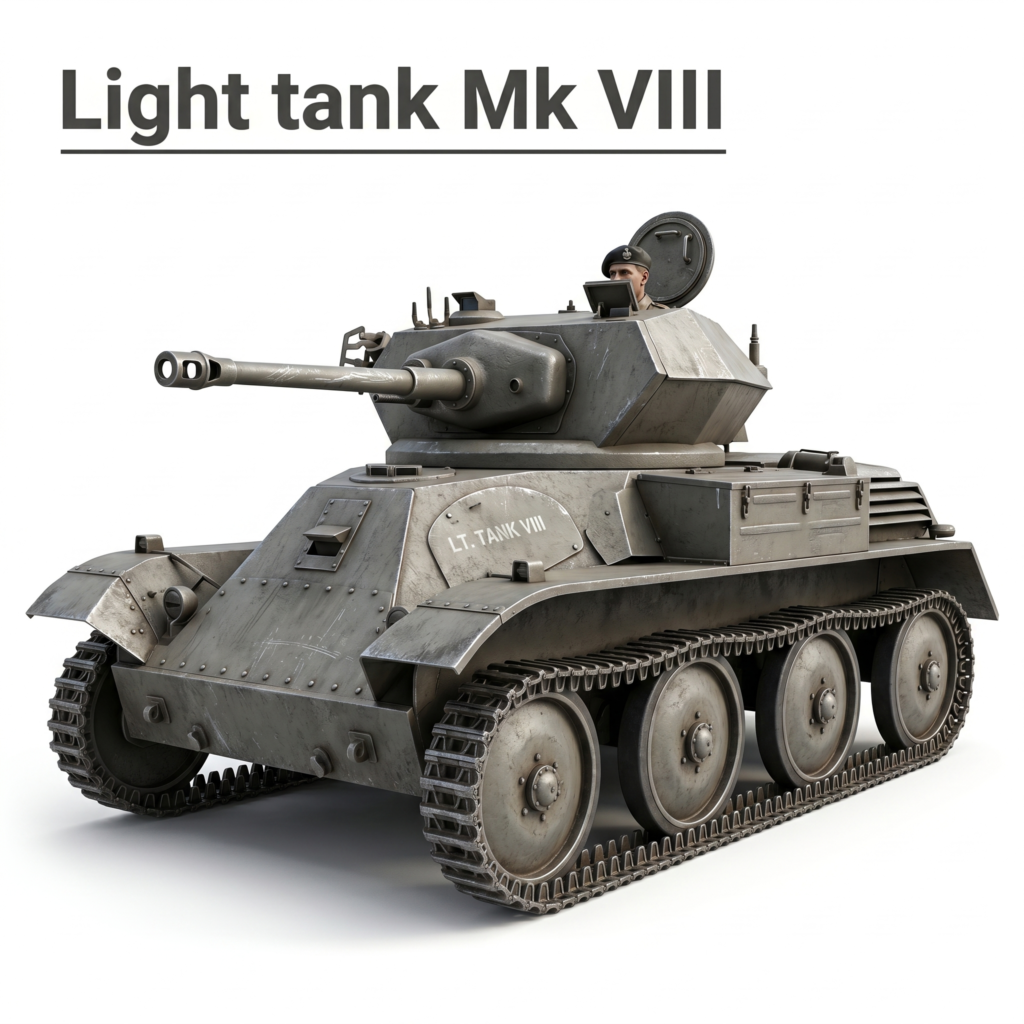
Named after American diplomat Harry Hopkins — a symbol of the Anglo-American alliance — this was an improved version of the Tetrarch. More reliable and better protected, but still armed only with a 2-pounder, it was already obsolete when it entered service and never saw combat. Its most lasting legacy was its chassis, which was used as the basis for the Alecto self-propelled gun. A minor tank, but worth knowing.
Part Two: The Infantry Tanks — The Iron Shield
Infantry Tank Mk I — Matilda I (A11) (1938–1940)
The original Matilda. An armoured turtle.
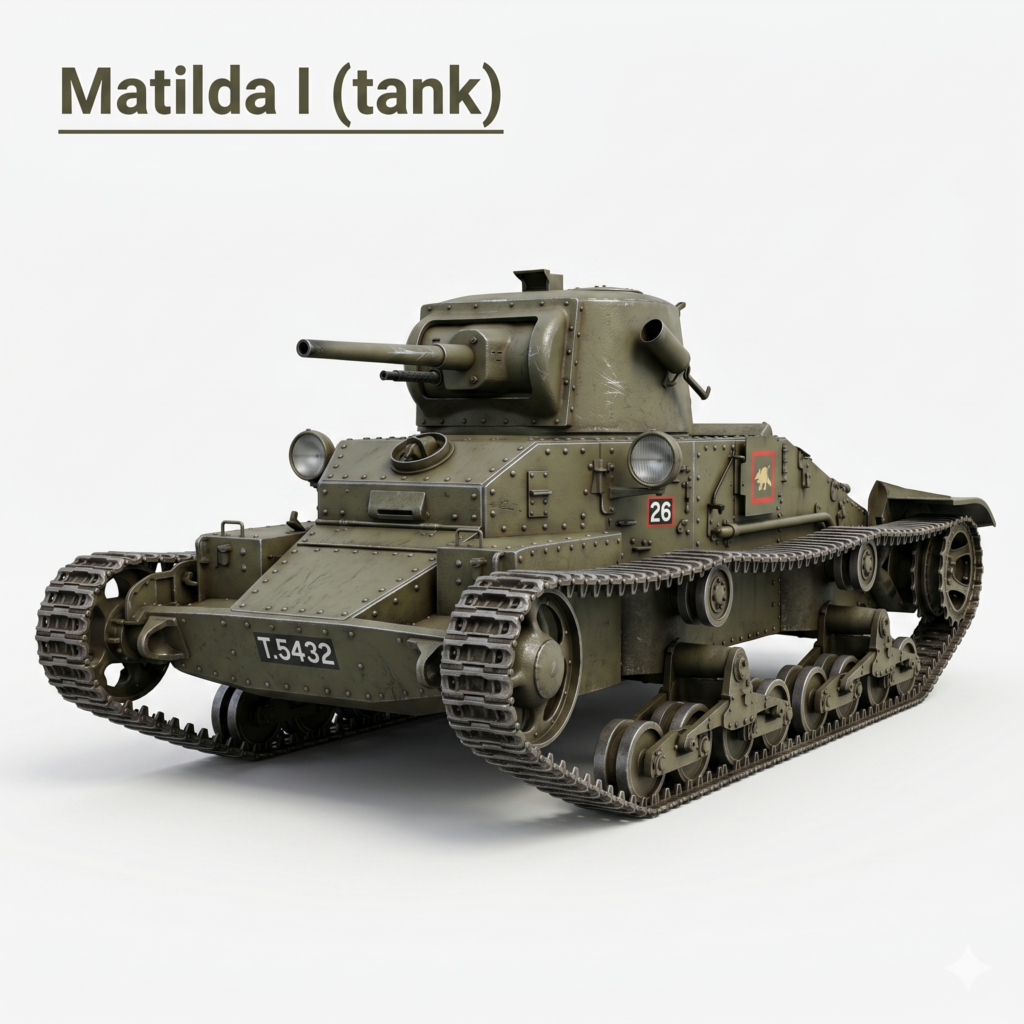
The first of the famous “Matilda” name was, in truth, a deeply peculiar vehicle. Slow — crawling at just 8 mph — heavily armoured for its day, and armed with nothing more than a single machine gun, it was designed to do one thing: survive while infantry walked forward. It looked ungainly, almost comical, with its duck-tail rear — which is perhaps why soldiers nicknamed it “Matilda,” after a popular cartoon duck.
About 140 were built and sent to France with the British Expeditionary Force in 1940. They held their own at Arras, briefly throwing Rommel’s 7th Panzer Division into confusion. But with no gun capable of fighting other tanks and a painfully slow pace, they were quickly retired. When the BEF evacuated at Dunkirk, nearly every Matilda I was left behind.
Infantry Tank Mk II — Matilda II (A12) (1939–1945)
The Queen of the Desert.
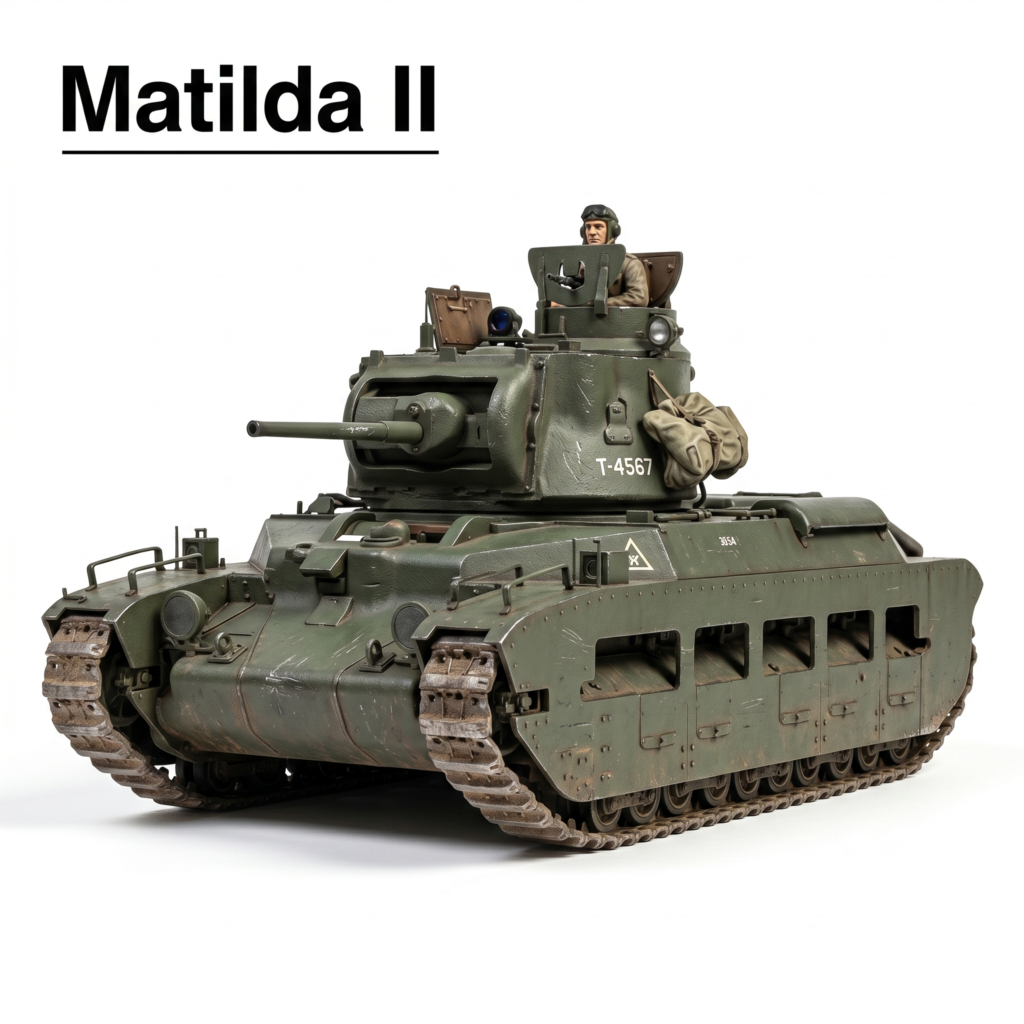
The Matilda II shared little with its predecessor except a name. This was a completely different, far superior machine. Heavier, better protected, and armed with a 2-pounder (40mm) gun, it was — for a brief, glorious period in 1940–1941 — virtually impervious to Italian anti-tank weapons. During Operation Compass in North Africa, small numbers of Matilda IIs carved through Italian forces like a hot knife through butter. The Italians had almost nothing that could stop them.
Then came Rommel and his Afrika Korps. The Germans had a secret weapon: the 88mm anti-aircraft gun pressed into an anti-tank role. The Matilda’s armour, so impressive against the Italians, was no match for the “88.” Heavy losses mounted. By the Second Battle of El Alamein in October 1942, few Matildas remained in British service.
But the story doesn’t end there. The Matilda II was the only British tank to serve from the very first day to the very last day of the war — passed to Australian forces, who used it extensively in the Pacific until 1945. The Australians even modified some with flamethrowers (the “Matilda Frog”) for jungle warfare. Tough, dependable, and enduring — much like the men who crewed her.
Produced: ~2,987 units.
Infantry Tank Mk III — Valentine (1940–1945)
The tank Britain never ordered, but desperately needed.
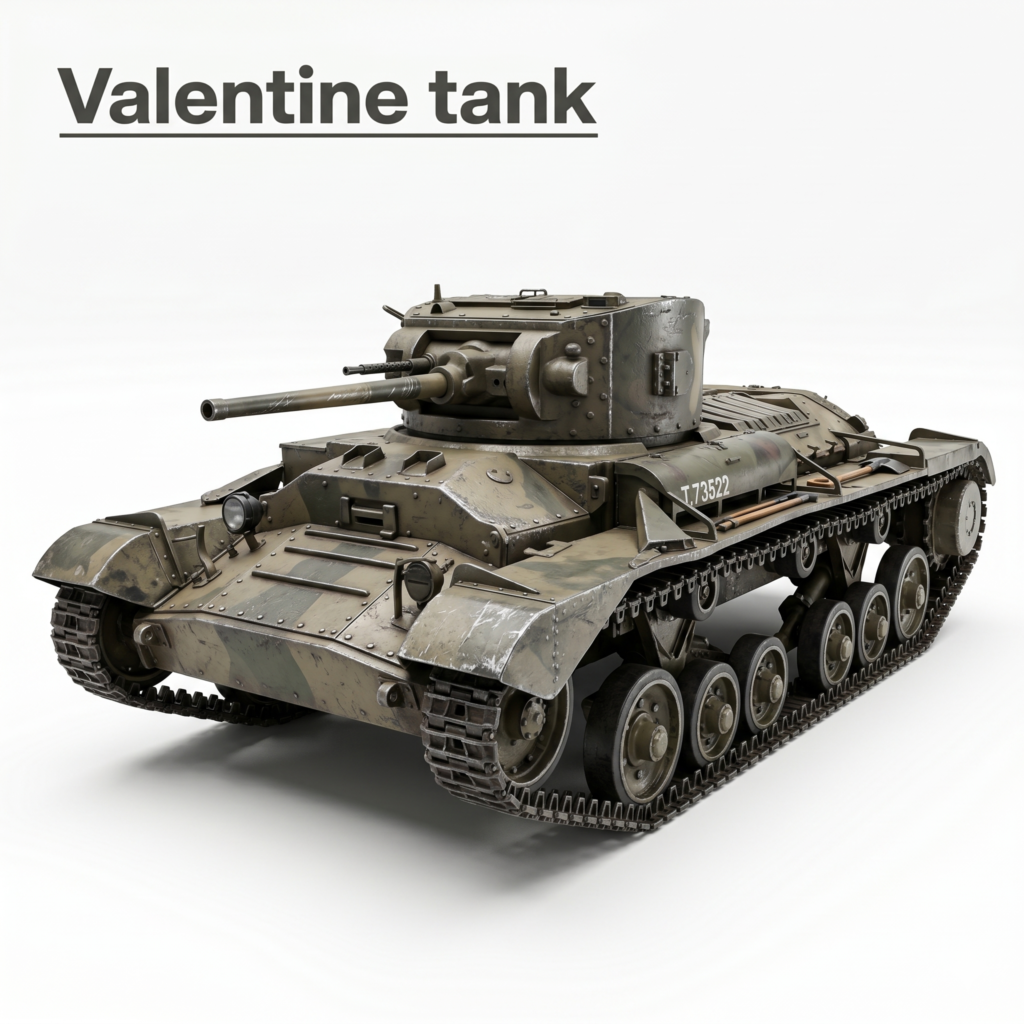
The Valentine has one of the most unusual origin stories of the war. Vickers-Armstrongs designed it entirely on their own initiative, without a government request, and submitted it to the War Office in 1938 — reportedly on Valentine’s Day (though historians debate this). The War Office initially rejected it. Then France fell, the BEF lost most of its armour at Dunkirk, and suddenly Britain needed tanks immediately. The Valentine got its green light.
It wasn’t perfect. The crew compartment was cramped, visibility was poor, and early models were underpowered. But it had two qualities that made it irreplaceable: exceptional mechanical reliability and robust armour. In a period when most British tanks broke down almost as often as they drove, the Valentine kept going. It saw action first in Operation Crusader in North Africa in December 1941, then in Italy, the Pacific, and Eastern Europe (thousands were sent to the Soviet Union under Lend-Lease, where Soviet crews appreciated its dependability).
The Valentine was progressively upgraded through at least eleven marks, gaining a 6-pounder gun and later a 75mm. By 1944 it was obsolete as a front-line tank, but its chassis lived on in the Bishop self-propelled gun and the Archer tank destroyer.
Produced: ~8,300 units — one of the most-produced British tanks of the war.
Infantry Tank Mk IV — Churchill (A22) (1941–1945)
Britain’s greatest infantry tank. Ugly, slow, and utterly magnificent.
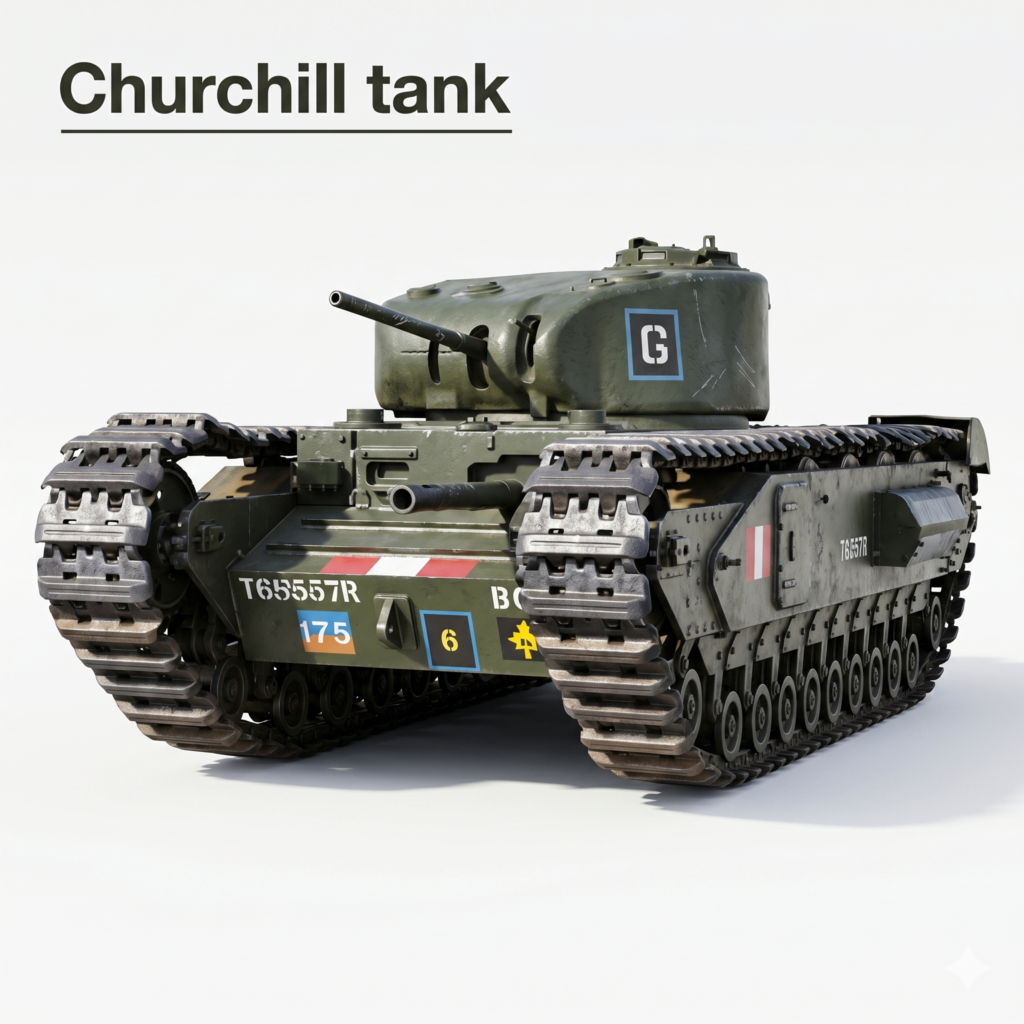
Named after Prime Minister Winston Churchill — who was reportedly not entirely pleased about a tank being named after him given its many early faults — the Churchill was a massive, heavily armoured beast designed to survive the worst the enemy could throw at it. Early models were plagued with mechanical problems so severe that the tank nearly got cancelled. Churchill himself reportedly intervened to keep production going.
His faith was vindicated. By the time the mechanical bugs were worked out, the Churchill had become the most versatile and survivable tank in the British arsenal. Its thick armour — up to 152mm on later marks — could absorb enormous punishment. It could climb slopes that defeated other tanks. And it could be adapted into almost anything.
The Churchill fought at Dieppe (disastrously, mostly due to tactical failures, not the tank’s fault), in Tunisia where it conquered terrain that German commanders declared impassable, in Italy, and in the final push through Northwest Europe. In the Tunisian campaign at Longstop Hill, Churchills climbed mountains that stunned German defenders who simply could not believe tanks had made it there.
Perhaps its greatest legacy was as a platform for specialised vehicles — flamethrowers (Churchill Crocodile), armoured vehicle Royal Engineers (Churchill AVRE), bridge-layers, and more. The Churchill Crocodile, pulling a trailer of flame fuel and projecting a stream of burning liquid 120 yards, was one of the most terrifying weapons of the war.
Produced: ~5,640 units across many marks.
Key Churchill Variants:
- Churchill Mk I–IV — progressive gun upgrades (2-pdr to 6-pdr to 75mm)
- Churchill Mk VII — the definitive “heavy” variant with maximum armour
- Churchill NA75 — field conversion fitting an American 75mm gun
- Churchill AVRE (Armoured Vehicle Royal Engineers) — carried a Petard mortar to demolish fortifications
- Churchill Crocodile — fearsome flamethrower variant
- Churchill Oke — earlier flamethrower version, used at Dieppe
- Churchill Double Onion — carried two large demolition charges for destroying obstacles
- Churchill Bobbin — laid a carpet of canvas over soft ground for vehicles to drive across
- Churchill ARK (Armoured Ramp Carrier) — became a living bridge for other vehicles to drive over
Part Three: The Cruiser Tanks — The Cavalry Reborn
Cruiser Tank Mk I (A9) (1939–1941)
The first of the line. Promising, flawed.
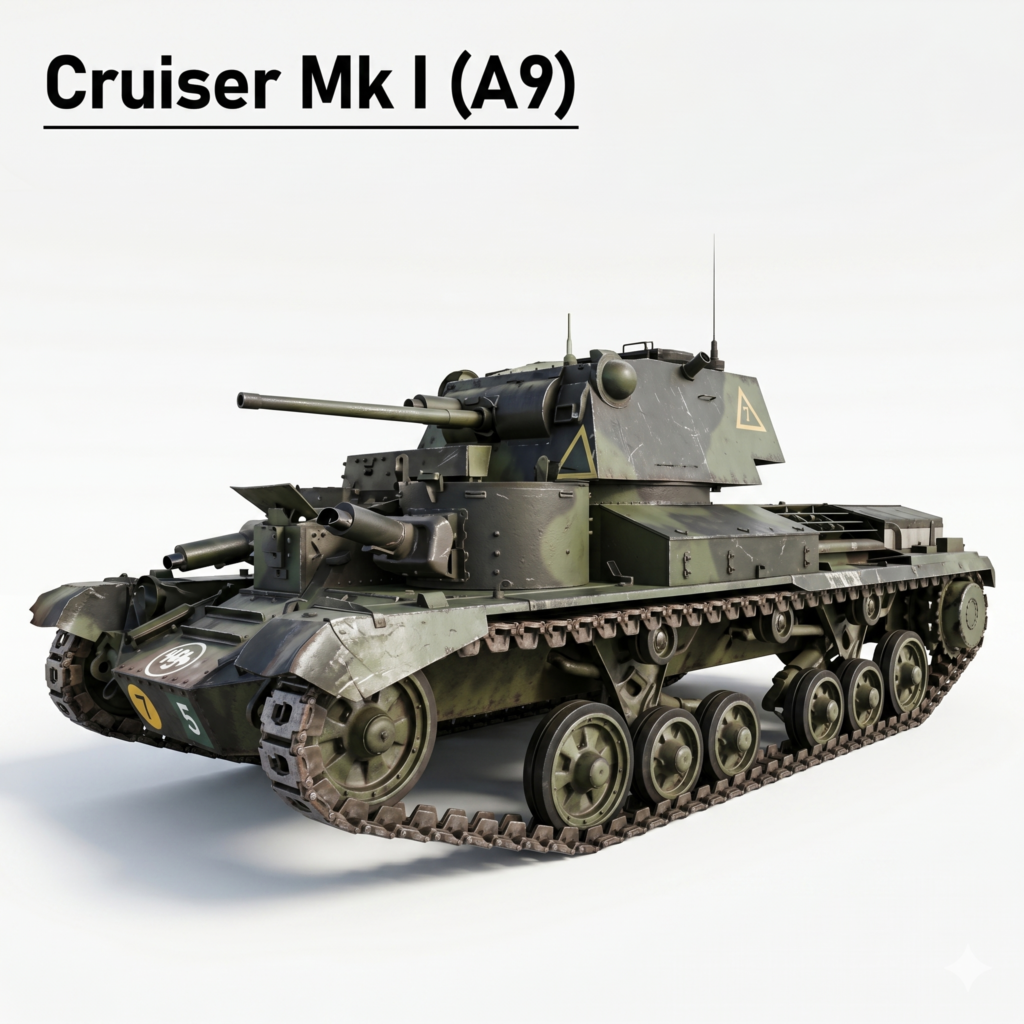
The A9 was Britain’s first purpose-built cruiser tank. Weighing about 12 tonnes and armed with a 2-pounder gun, it had reasonable speed and two small sub-turrets carrying machine guns (an idea quickly abandoned as wasteful). It served in France in 1940 and in the early North African campaigns, performing adequately but suffering from mechanical unreliability. By 1941 it was withdrawn from front-line service.
Cruiser Tank Mk II (A10) (1939–1941)
The “Heavy Cruiser” that satisfied no one.
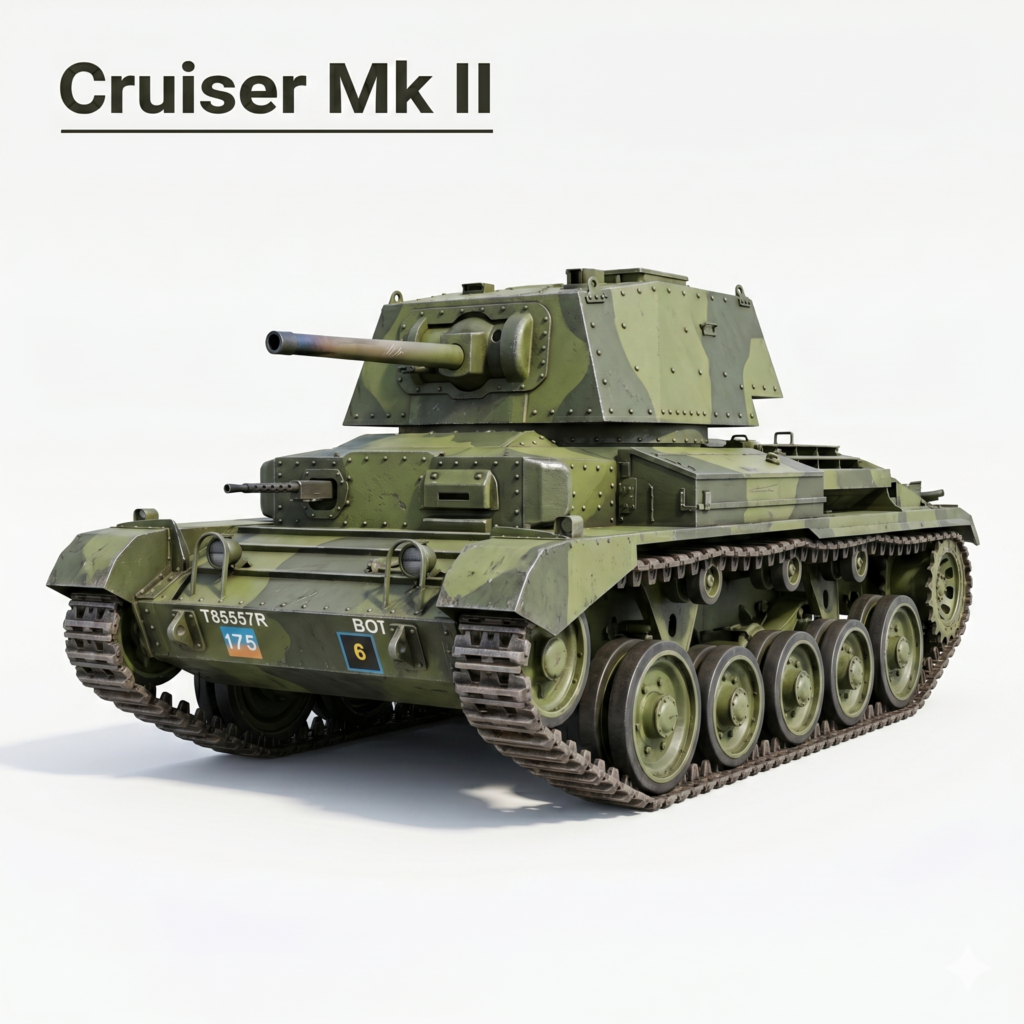
The A10 was an attempt to create a more heavily armoured version of the A9, but in doing so it became too slow for a cruiser and not armoured enough for an infantry tank. It fell awkwardly between the two categories. It served in France and early North Africa before being retired — a reminder that the British doctrine of strict tank categories often produced designs that belonged fully in neither.
Cruiser Tank Mk III (A13 Mk I) (1939–1940)
Christie suspension arrives in Britain — and changes everything.
In the mid-1930s, a British engineer named Morris Martel watched an American inventor named J. Walter Christie demonstrate a revolutionary new tank suspension system that allowed dramatically higher speeds over rough terrain. Britain bought two Christie-suspension hulls and used them as the basis for the A13. The result was a revelation — fast, agile, and far smoother over broken ground than anything that came before.
The A13 carried the 2-pounder gun and served in France and early North Africa. It was too thinly armoured and too unreliable to last long in front-line service, but the Christie suspension it introduced would define British cruiser design for the rest of the war.
Cruiser Tank Mk IV (A13 Mk II) (1939–1941)
More armour, same problems.
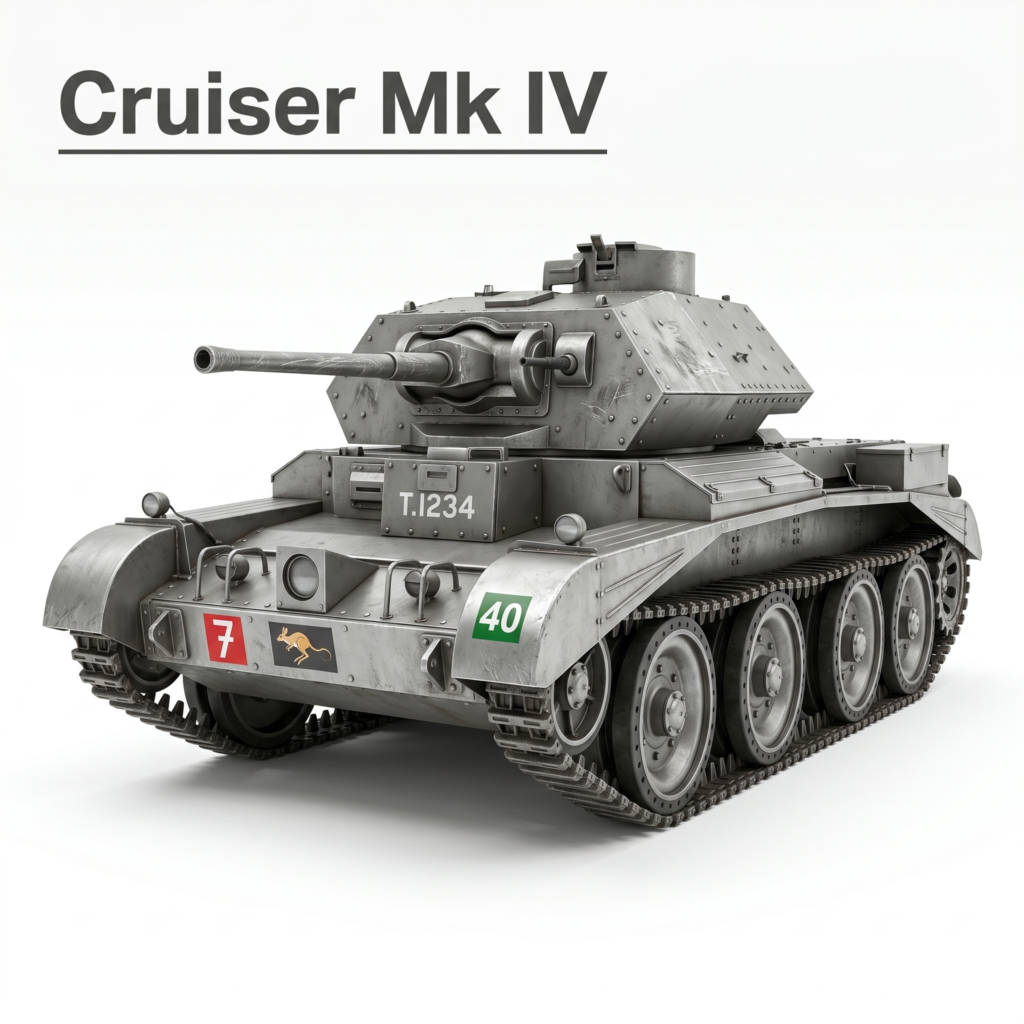
The Mk IV was the A13 with extra armour bolted on — an improvement that added weight without fully solving the protection problem. It still had the same mechanical frailty. It served in France, Greece, and North Africa, and like its predecessors was outclassed by developments in German tank guns by 1941.
Cruiser Tank Mk V — Covenanter (A13 Mk III) (1940–1943)
The tank that never went to war.
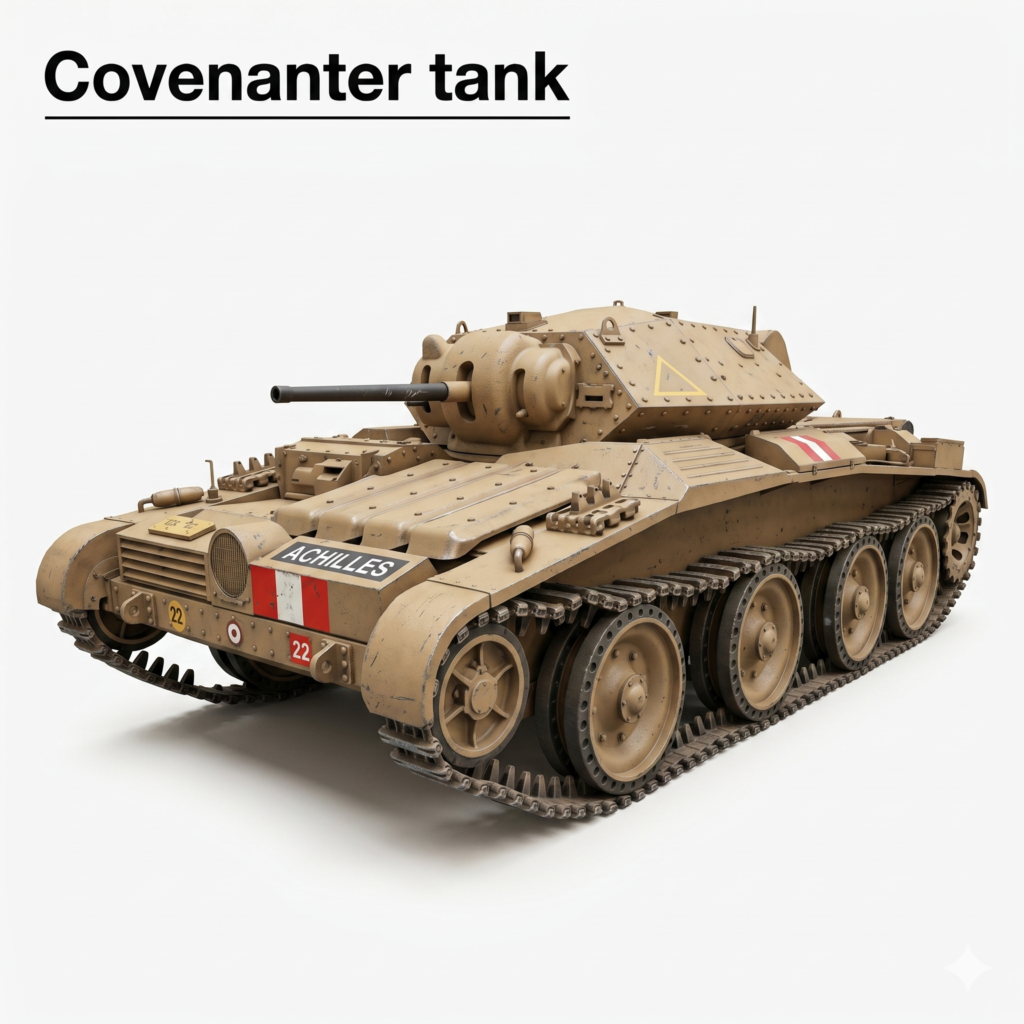
The Covenanter is one of the most embarrassing chapters in British tank history. It looked sleek and modern, entered service in 1940, and was promptly found to be so mechanically unreliable that it could not be sent into combat. The cooling system was dangerously flawed — the engine could overheat catastrophically. Engineers tried fix after fix. Nothing fully worked. The Covenanter spent its entire operational life in Britain, used for training only, never firing a shot in anger.
Over 1,700 were built — a colossal waste of industrial capacity during the war’s most critical years. The Covenanter is a cautionary tale: a tank rushed into production before it was ready, a product of the desperate need to fill the ranks after Dunkirk.
Cruiser Tank Mk VI — Crusader (A15) (1941–1943)
Fast, glamorous, and tragically unreliable. The icon of the desert war.
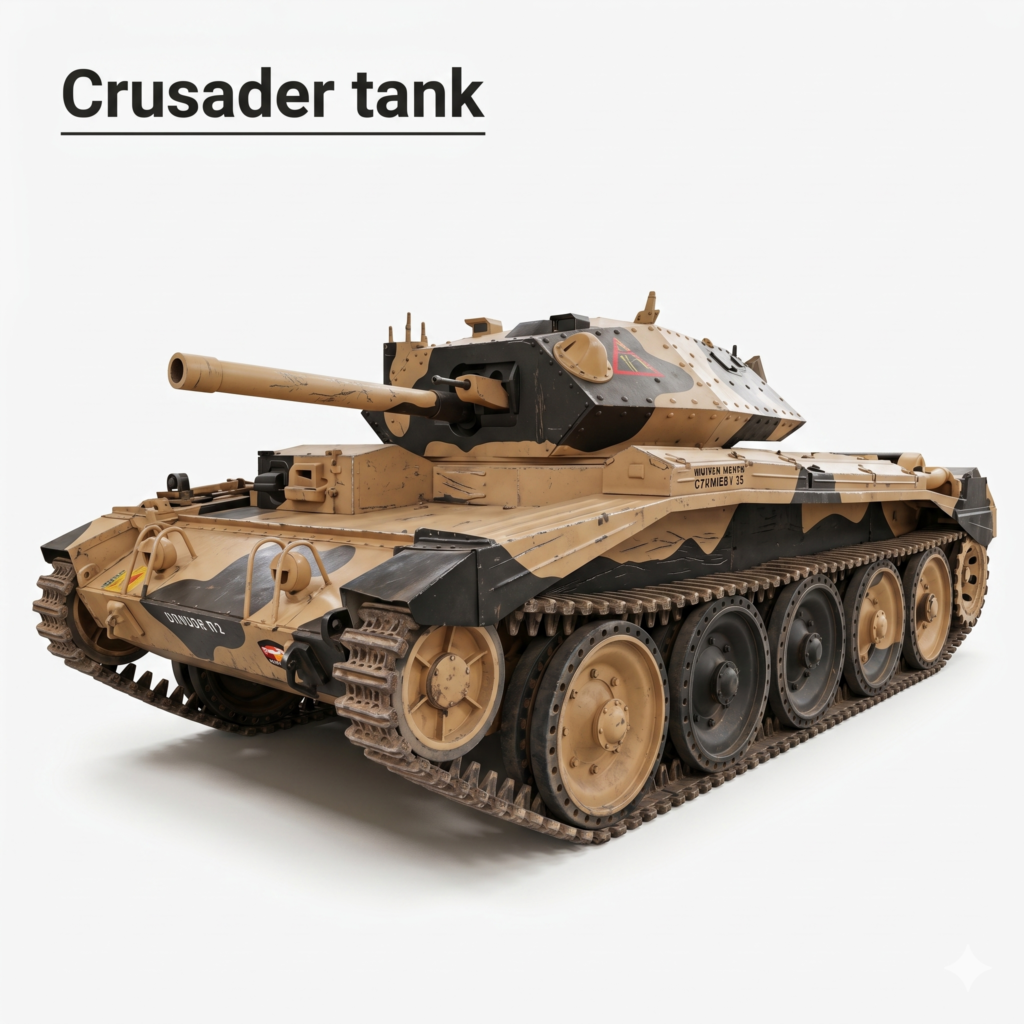
If any British tank captures the romance and tragedy of the North African campaign, it is the Crusader. Long, low, and sleek, it could reach 27 mph across the desert floor. When it worked. And that was the problem.
The Crusader was notoriously unreliable. More Crusaders were lost to mechanical breakdown than to enemy fire. The engine, cooling system, and tracks all suffered in the heat and sand of the Western Desert. Crews became expert mechanics by necessity. Yet they loved their tank — because when it ran, it was fast and agile, darting across the desert like a cavalry horse reborn in steel.
Introduced in Operation Battleaxe in June 1941, the Crusader served through the see-saw battles of the desert — Tobruk, Gazala, El Alamein. Early marks carried the 2-pounder gun, hopelessly outranged by German guns. The Crusader III finally received the 6-pounder, giving it real hitting power, but by then better tanks were arriving. By 1943, the Crusader was phased out as a gun tank — though it had a second life as an anti-aircraft tank, carrying twin or triple Oerlikon cannons to protect armoured columns from Luftwaffe attack.
Produced: Over 5,300 units.
Cruiser Tank Mk VII — Cavalier (A24) (1942–1943)
The tank that tried and failed.
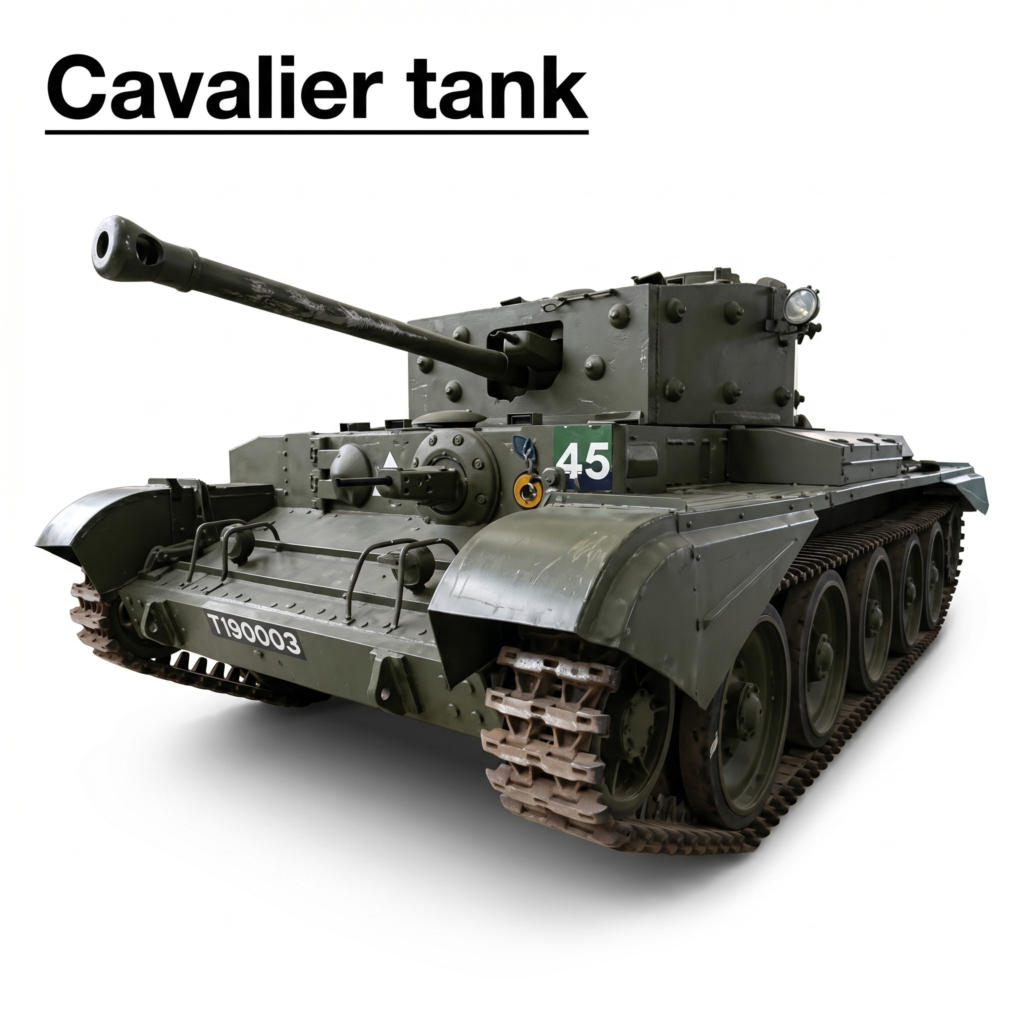
The Cavalier was the first of three related cruisers developed to a common specification — bigger, better armed, and more powerful than the Crusader. It used the same unreliable Liberty engine that had cursed its predecessors. Reliability problems meant it was never accepted as a front-line tank and served only in training. Some were converted to artillery observation vehicles. A dead end — but it helped point the way to better things.
Produced: 503 units.
Cruiser Tank Mk VII — Centaur (A27L) (1942–1944)
A stepping stone on the road to the Cromwell.
The Centaur was a parallel development to the Cromwell, built by Leyland Motors using the same hull design but fitted with an older, upgraded Liberty engine rather than the new Meteor. It too suffered reliability issues and was not accepted as a front-line gun tank. Most Centaurs were used for training.
But the Centaur IV Close Support variant found genuine glory. Fitted with a 95mm howitzer, Marines of the Royal Marine Armoured Support Group fired these guns from landing craft during the D-Day landings, then brought them ashore to support the beach assault. It was one of the most unusual combat roles of the entire war — a tank firing from a boat.
Produced: 1,821 units.
Cruiser Tank Mk VIII — Cromwell (A27M) (1943–1945)
Britain finally gets it right.
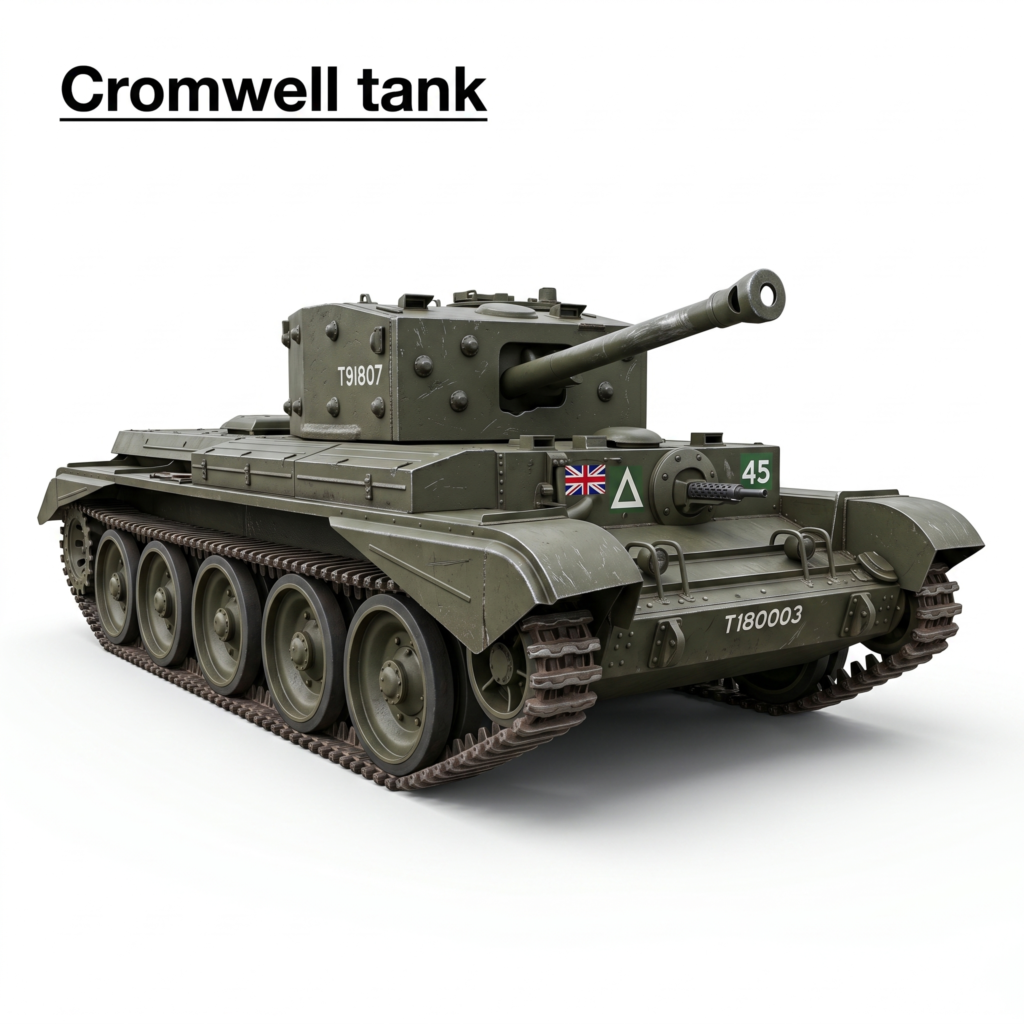
The Cromwell was the tank Britain had been trying to build since 1936 — and it was worth the wait. Fitted with the magnificent Rolls-Royce Meteor engine (a de-rated version of the Merlin engine that powered the Spitfire), it was fast, reliable, and well-armed with a 75mm gun capable of firing both armour-piercing and high-explosive shells.
Cromwells entered service in 1943 and formed the backbone of British armoured divisions from D-Day onwards. The 7th Armoured Division — the famous Desert Rats — rolled into Normandy in Cromwells. They were fast enough to exploit breakthroughs, reliable enough to keep moving, and powerful enough to take on most German armour — though they remained outclassed by the Tiger and Panther.
The Cromwell represented a turning point: Britain had finally abandoned the doctrine of producing a tank for every purpose, and had built a machine that could genuinely fight.
Produced: Over 3,000 units.
Cruiser Tank Mk VIII — Challenger (A30) (1944–1945)
A stopgap with a mighty gun.
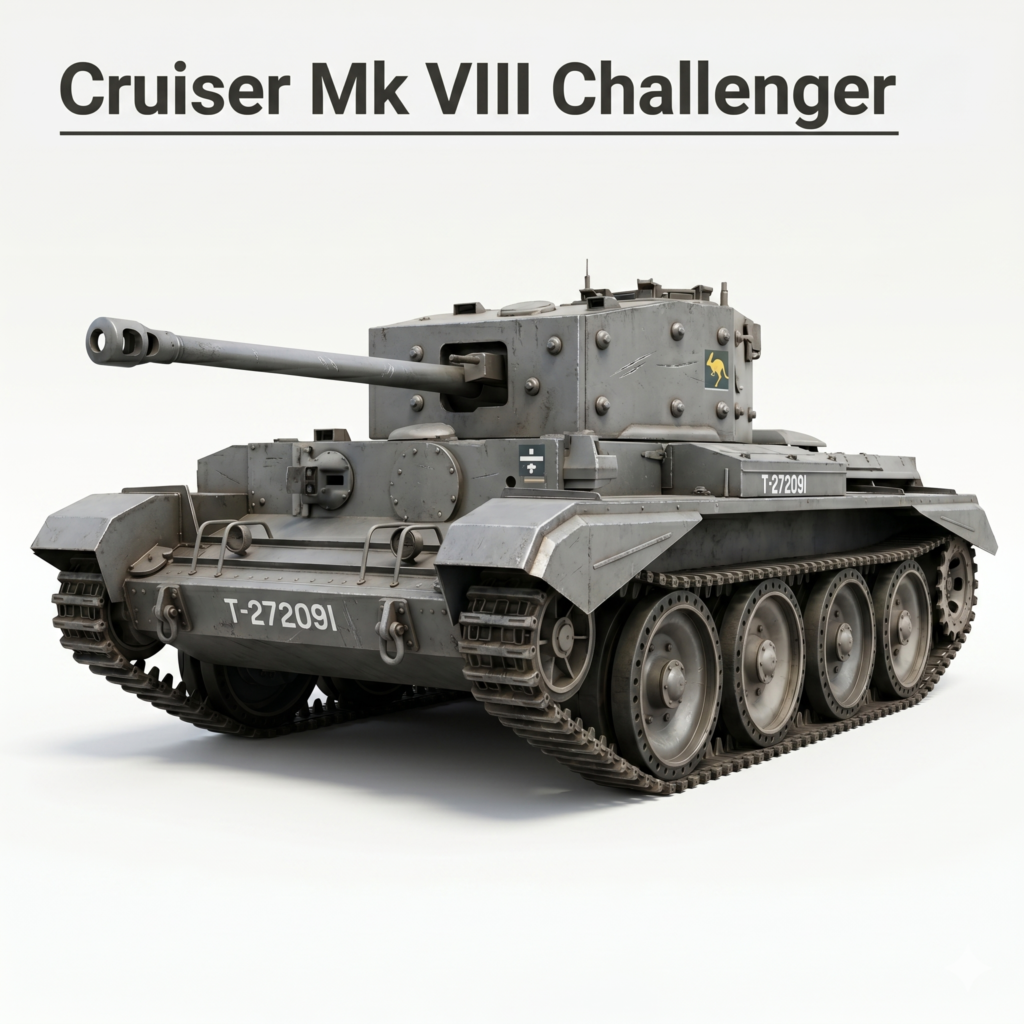
When the 17-pounder anti-tank gun became available, British engineers needed a vehicle to carry it urgently. The solution was to stretch the Cromwell hull, add a new turret, and mount the devastating 17-pdr. The result was the Challenger — fast and powerfully armed, but with a tall, angular profile that made it conspicuous. It was complicated to produce and difficult to maintain.
The Challenger was always considered a stopgap while better solutions were developed. It served in Northwest Europe in 1944–45, and while it could destroy any German tank at range, it was eventually superseded by the Sherman Firefly (an American Sherman upgraded with a British 17-pounder) as the preferred 17-pdr platform.
Produced: 200 units.
Cruiser Tank — Comet (A34) (1944–1945)
The finest British tank of the war. Arrived too late.
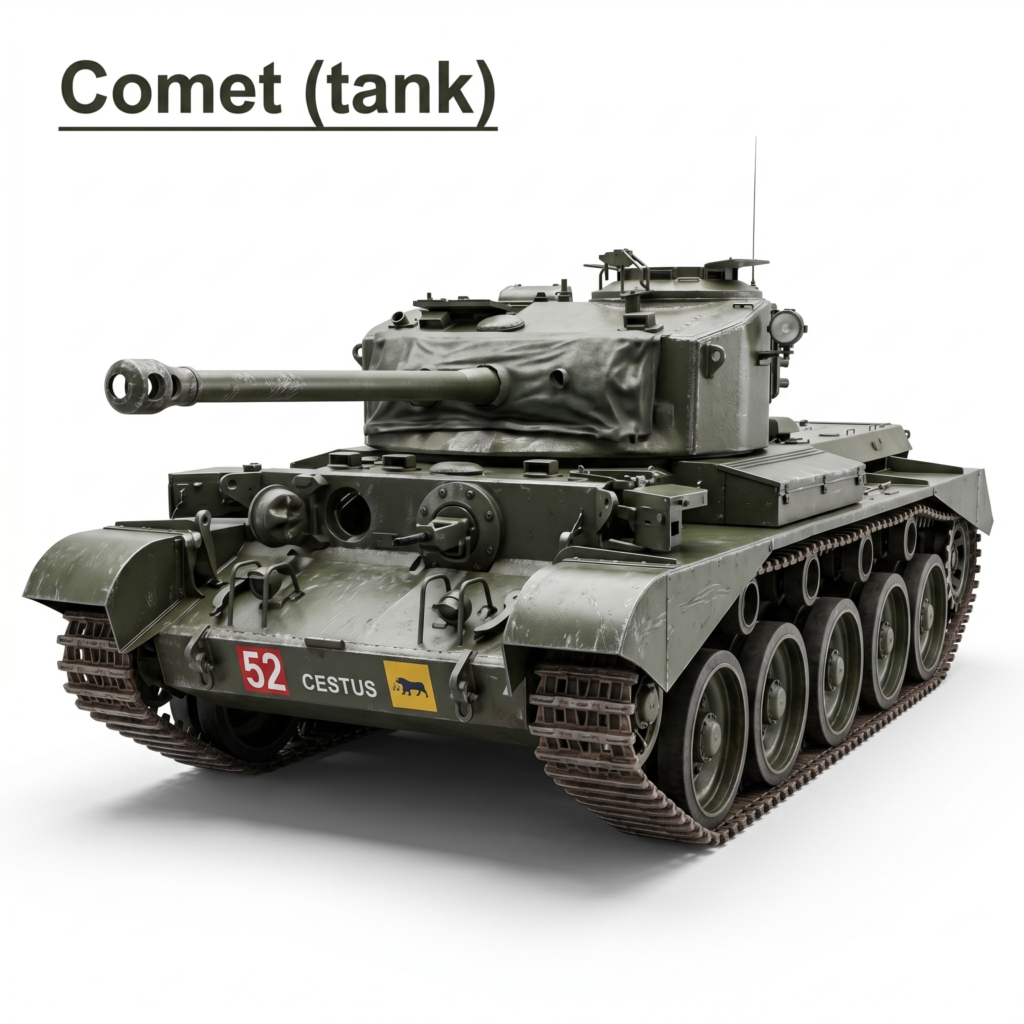
The Comet was the culmination of everything Britain had learned about tank design since 1939. Built around a new 77mm gun — effectively a shortened 17-pounder just as lethal but more compact — it combined firepower, speed, armour, and reliability in a way no previous British tank had managed. Crews loved it. It was agile and dependable, and its gun could penetrate any German tank at combat ranges.
The tragedy of the Comet is one of timing. It didn’t enter combat until January 1945 — just four months before Germany surrendered. The 11th Armoured Division crossed the Rhine and raced into Germany in Comets, performing brilliantly. But the war was nearly over.
Had it arrived in 1943, the story of British armour might have been told very differently.
Produced: 1,186 units.
Part Four: The Special Cases and Prototypes
Sherman Firefly
Not a British design, but Britain’s most lethal tank.
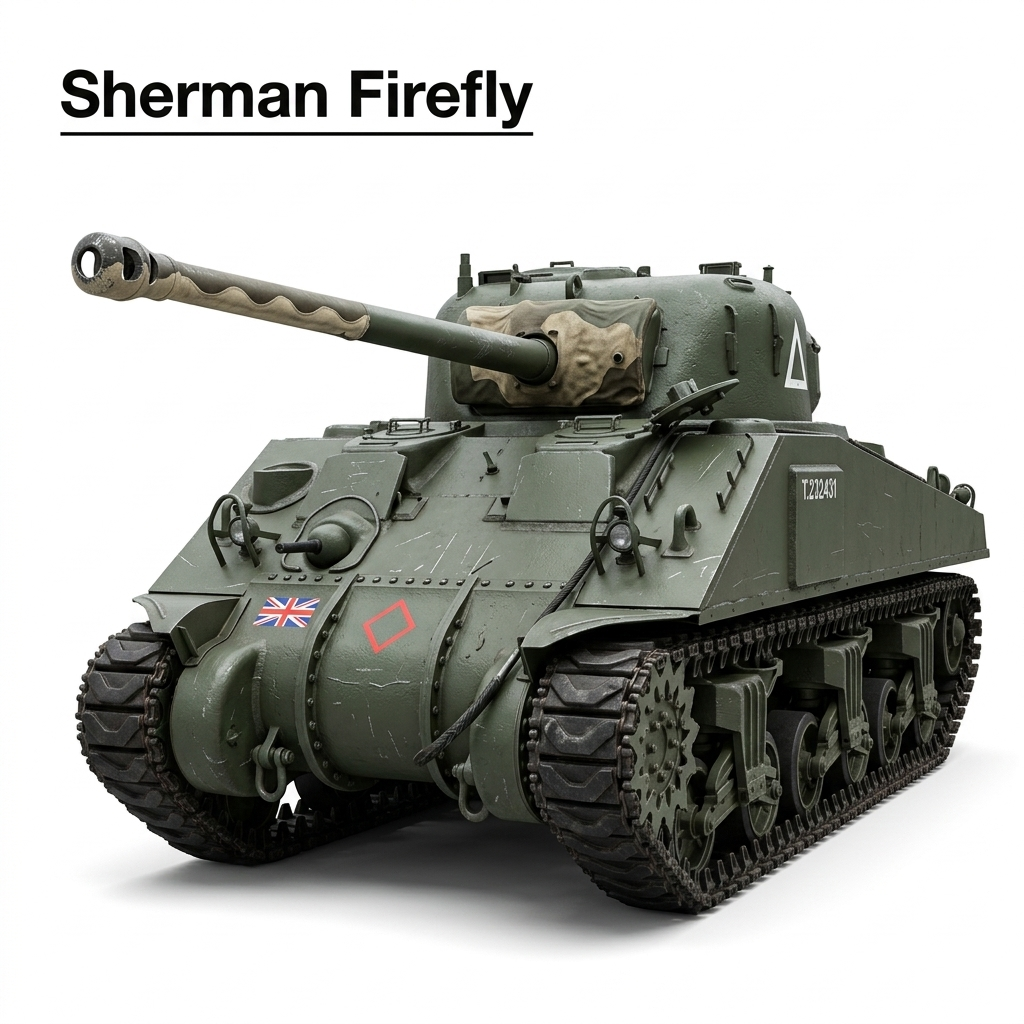
Strictly speaking, the Sherman Firefly was an American M4 Sherman hull fitted with a British 17-pounder gun — a hybrid born of necessity. When British tank crews faced Tiger tanks in Normandy and found that almost no Allied gun could reliably penetrate the Tiger’s frontal armour, the Firefly became their answer.
It was immediately so dangerous that German tank commanders specifically trained their crews to identify and destroy Fireflies first, before engaging other Shermans. British crews began camouflaging the Firefly’s distinctive long barrel to make it harder to spot. The Firefly became a battlefield priority target — the highest compliment you can pay a weapon.
TOG 1 and TOG 2
The tanks that time forgot.
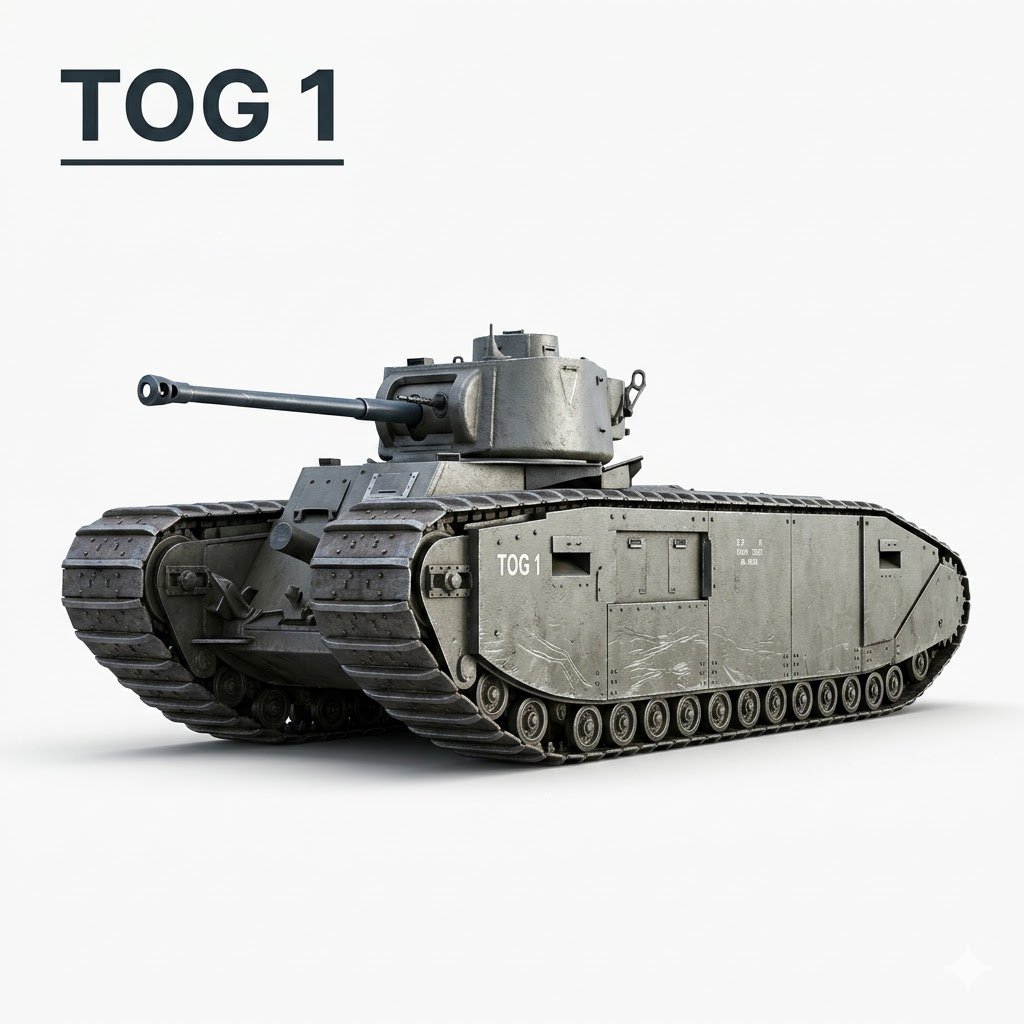
TOG stood for “The Old Gang” — a committee of veteran engineers from World War One who were tasked with designing a tank for the kind of warfare they remembered: crossing shell-cratered, waterlogged ground. The resulting machines were enormous, slow, and antiquated before they left the drawing board. The TOG 2 eventually mounted a 17-pounder gun in a turret later reused on the Challenger, but neither vehicle ever saw service. They remain fascinating historical curiosities — a last gasp of the trench warfare school of thought.
A33 Excelsior
The tank that wanted to replace the Churchill — and couldn’t.
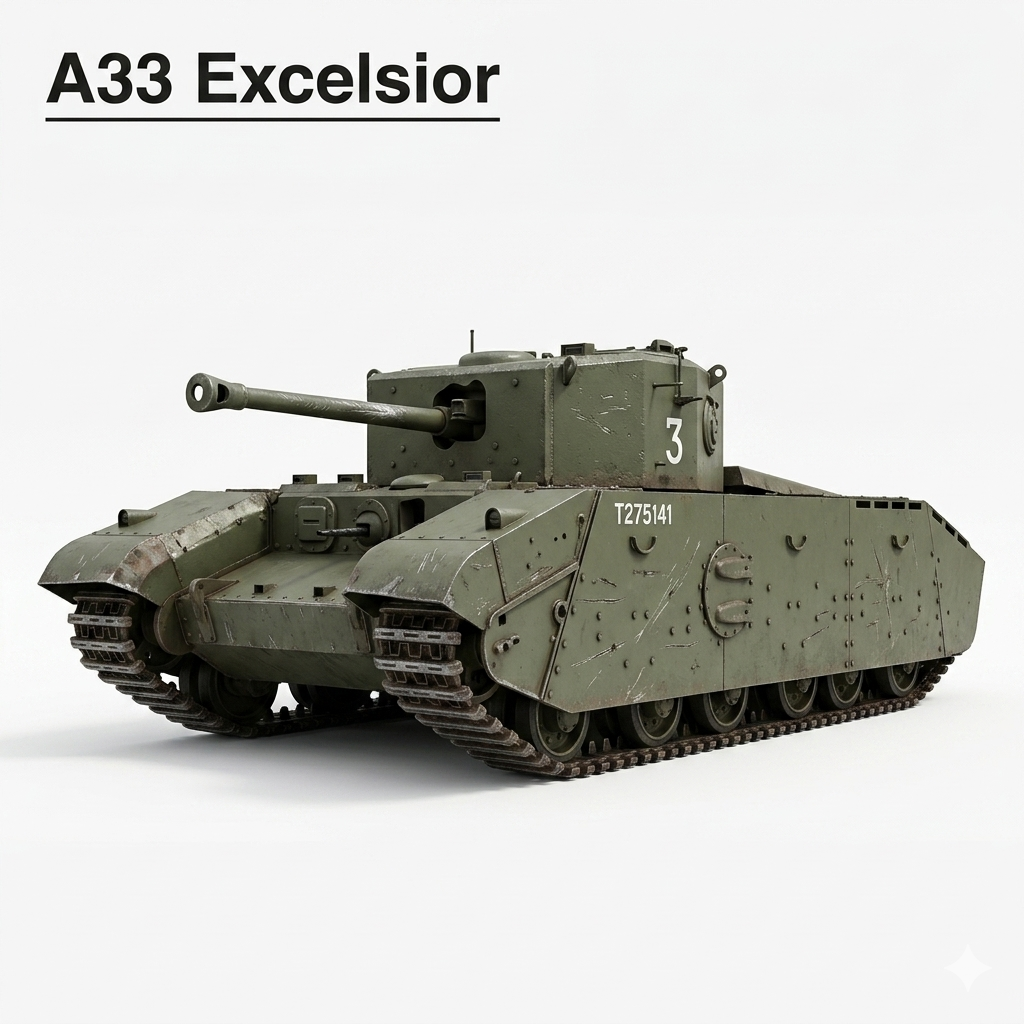
Designed in 1943 as a potential replacement for the Churchill in case that troubled machine was cancelled, the Excelsior combined heavy armour with a Meteor engine. It performed well in trials but was never needed — the Churchill, by then much improved, continued in service. The Excelsior was abandoned in 1944.
A38 Valiant
A Valentine’s final evolution.
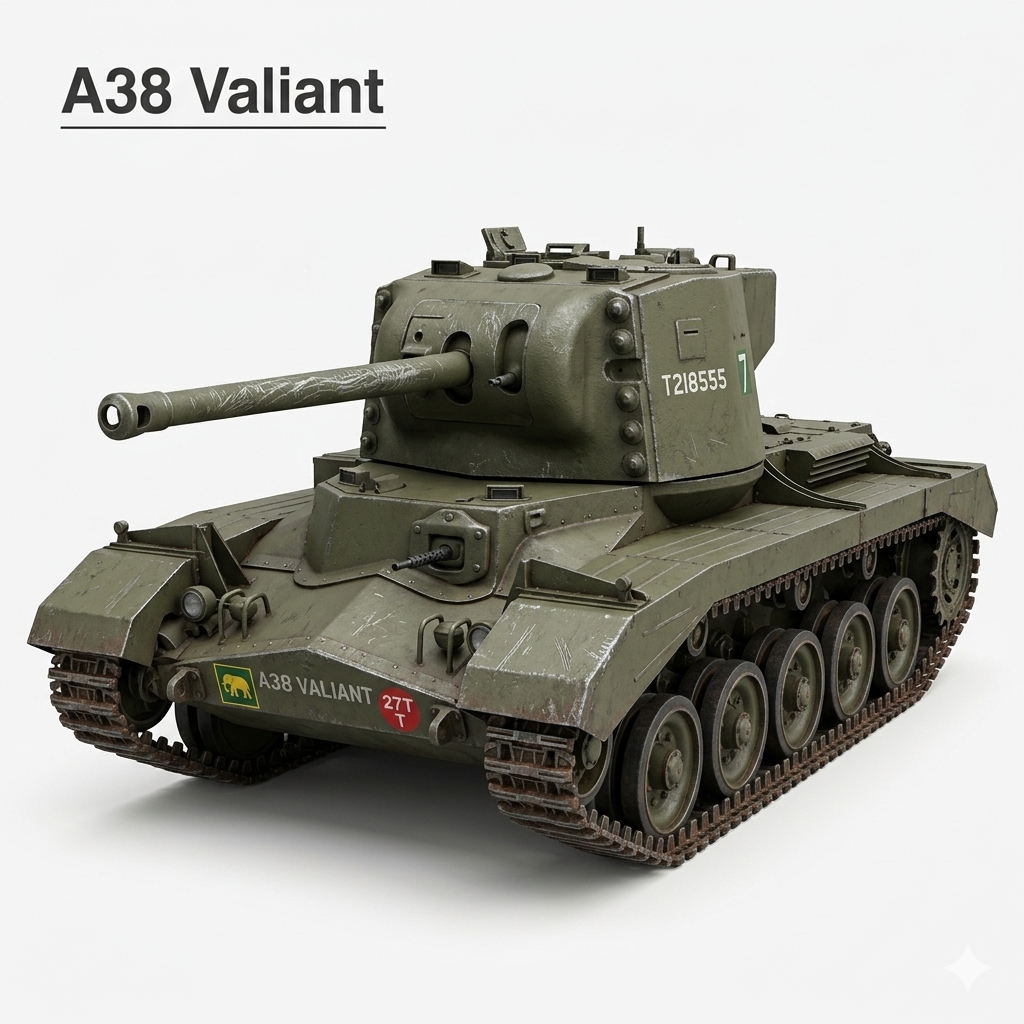
The Valiant was a heavily armoured, compact assault tank developed as a potential successor to the Valentine, intended for use in the Far East’s jungle terrain. It never went beyond testing in 1944. The war in the Far East ended before it could enter service.
A39 Tortoise
Britain’s monster. 78 tonnes of too-late.
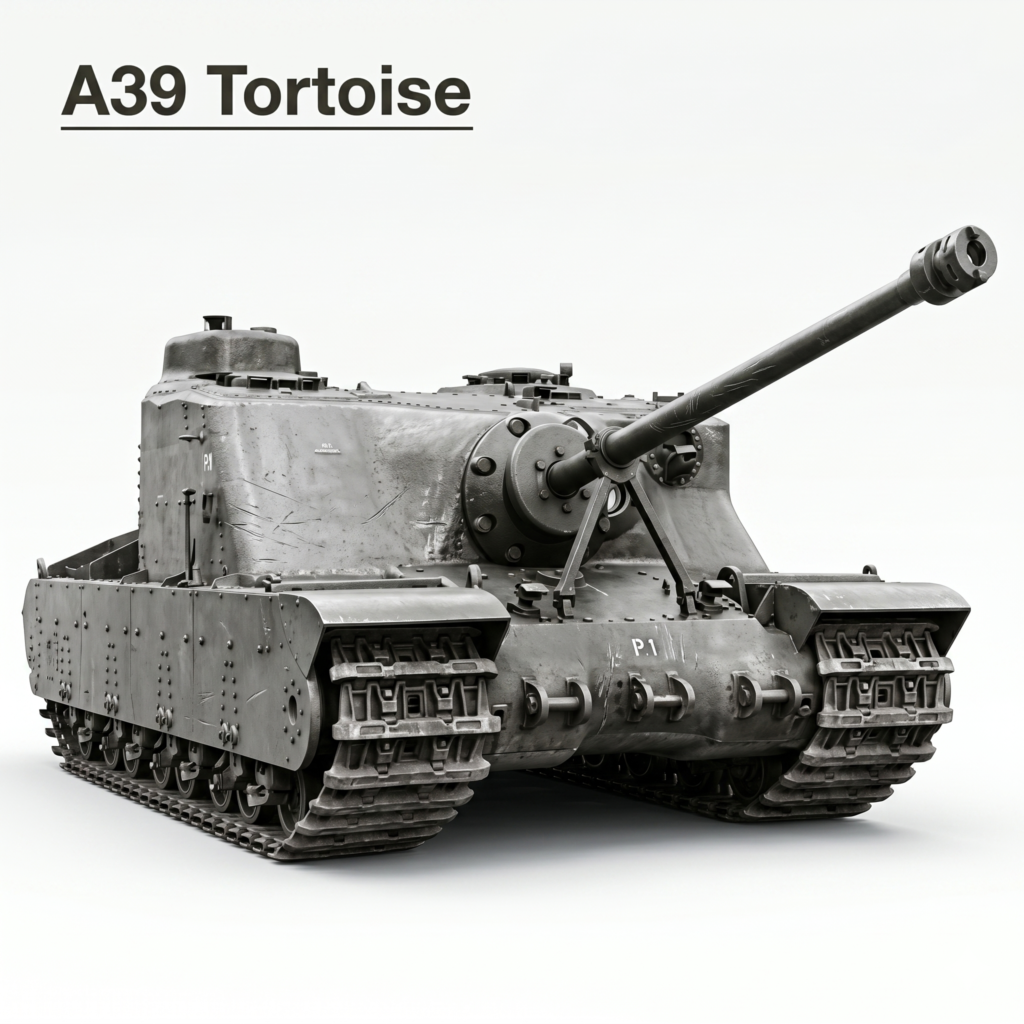
The Tortoise was Britain’s answer to the question: what if we built a tank that could not be stopped? The answer weighed 78 tonnes. Its 32-pdr gun could destroy anything on the battlefield, and its armour was virtually impenetrable. It was also extraordinarily slow, nearly impossible to transport, and its pilot models were delivered after the war had ended. Six were built; none ever fired in anger. The Tortoise stands as a monument to ambition outpacing practicality.
Churchill Black Prince (A43)
Churchill’s successor that never was.
The Black Prince was an enlarged Churchill designed to carry the 17-pounder gun. It was heavier, wider, and better armed than the standard Churchill — but by the time prototypes were tested in 1945, the war was over and the Centurion had made it obsolete. Only six were built.
Centurion (A41)
Arrived too late, but changed everything after.
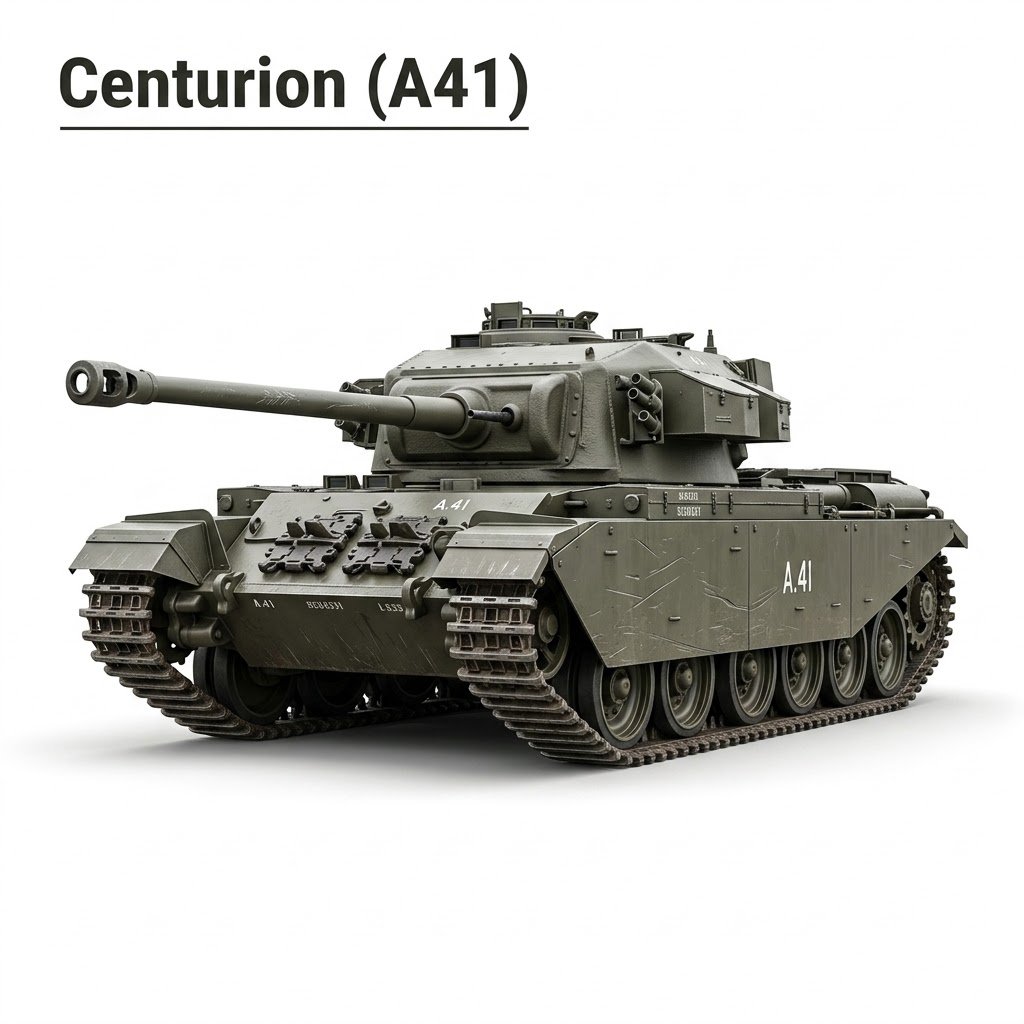
The Centurion was Britain’s attempt to build a universal tank — one that combined the firepower of a tank destroyer, the protection of an infantry tank, and the mobility of a cruiser. It succeeded brilliantly. But the first examples arrived in Germany in May 1945, just as the war ended, and never saw combat in World War II.
The Centurion went on to become one of the most successful and widely used tanks in post-war history, serving in Korea, the Middle East, Vietnam, and beyond. In a sense, it was WW2’s greatest British tank — it just fought all its wars afterwards.
Hobart’s Funnies — The Specialised Armour of D-Day
The tanks that saved thousands of lives on the beaches of Normandy.
Major-General Percy Hobart commanded the 79th Armoured Division, which was given a remarkable mission: develop specialised armoured vehicles to overcome the obstacles of amphibious assault. The result was an extraordinary collection of modified tanks known as Hobart’s Funnies.
- DD (Duplex Drive) Tank — a Sherman or Valentine fitted with a flotation screen and propellers, capable of swimming ashore from landing craft.
- Crab / Flail Tank — a tank with a rotating drum of chains at the front, beating the ground to detonate mines. Used extensively at Normandy to clear paths through minefields.
- AVRE (Armoured Vehicle Royal Engineers) — Churchill tanks carrying Petard mortars to demolish bunkers and obstacles.
- Bobbin Tank — laid a canvas carpet over soft sand or clay for vehicles to drive across.
- Fascine — carried huge bundles of wood to drop into ditches, creating instant bridges.
- Ark — drove into an obstacle and became a ramp, allowing other vehicles to drive over it.
- Crocodile — flamethrower tank that terrified defenders.
American commanders famously declined Hobart’s offer of these specialised vehicles for Omaha Beach. The horrific casualties at Omaha — compared to the British and Canadian beaches where the Funnies were deployed — stand as a grim testament to what the Americans missed.
Epilogue: The Verdict on Britain’s Armour
For much of the war, British tank crews were asked to fight in machines that were mechanically unreliable, under-armed, and under-protected. They did so with remarkable courage and professionalism. Many paid with their lives for the failures of designers, committees, and the rigid doctrine of three tank types.
But the British were not standing still. From the disaster of France in 1940 to the triumph in Northwest Europe in 1945, British tank design underwent a revolution. The Cromwell fixed the reliability problem. The Comet and Centurion fixed the firepower problem. Hobart’s Funnies solved the specialised assault problem in ways that no other nation matched.
Britain invented the tank in 1916. By 1945, after years of painful lessons, it had finally remembered how to build one properly. The tragedy is only that it took so long — and cost so many crews their lives in machines that deserved better.